ZELIO BLOG
Latest news, tips, and insights from the electric mobility revolution.

Zelio E Mobility Gujarat Dealers Meet 2026
Last week Zelio brought its Gujarat dealer network together for an event, the company is calling the Gujarat Dealers Meet 2026, themed around Driving Gujarat Towards an Electric Future. Word of it spread quickly through Zelio's official channels and people following the brand's progress in the state responded well, which says something about how closely people are watching the company's moves in this region right now. Why Gujarat Specifically Gujarat is not a small market for Zelio. It is one of the strongest states in the company's network, built on a dealer chain that has grown steadily across cities including Ahmedabad, Surat and Vadodara. Zelio counts Gujarat among the handful of states where it has a real, established presence, right alongside markets like Uttar Pradesh, Haryana, Punjab, Rajasthan, Madhya Pradesh and Maharashtra. This meet was not about breaking into a new market. Gujarat already matters too much to Zelio for that. It was about pushing further into a state the company has already done well in, rather than sitting back because things are going fine. The plan is simple: more outlets, better coordination between dealers and a stronger local support system, the kind of investment a state usually gets when a brand actually wants to lead there instead of just being present. Check the latest prices of Zelio Electric Scooter at Battery Scooty Price list Why a Meet Like This Actually Happens A dealer meet is rarely just a formality. Most of the time it comes down to one thing: making sure every dealer in the state is telling the same story and offering the same experience, whether a customer walks in on day one or comes back two years later with a service question. For a brand that positions itself among the better electric scooter makers in the country, that kind of consistency is not optional. A dealer in Ahmedabad and a dealer in Surat need to sound like they work for the same company, not two different ones. Getting an entire state's network in one room is how that actually gets sorted, rather than hoping every showroom figures it out on its own. These meets are also where a company shares what is coming next and what dealers should be preparing their teams for. That kind of thing rarely lands well over a phone call or a group chat. It works when people are sitting across from each other in the same room, in a state the company clearly intends to keep growing in. What This Means If You Are in Gujarat If you are in Gujarat and thinking about an electric scooter, a stronger and better aligned dealer network nearby is a real, practical benefit, even if it never makes for a dramatic headline. It usually shows up in smaller ways. Shorter waits for stock. Staff who actually know the current lineup instead of reciting a brochure. A service experience that still holds up once the scooter has been on the road for a while. It also lines up with something a lot of buyers in the state have already picked up on. Zelio has earned a solid reputation as one of the more dependable electric scooter brands in India and a meet like this is really just the company making sure that reputation keeps holding up in one of the states where it matters most. If you want to see what is available near you, the Zelio dealer locator covers current showrooms across Gujarat and the rest of the country. A Few Zelio Electric Scooters Available Through the Network Dealers across Gujarat carry Zelio's full range, so it is worth knowing what most riders actually end up buying. The Zelio Gracy i is the model most people walk out with, built for everyday city commuting with a solid mix of range and reliability. Someone wanting something lighter for narrower streets usually looks at the Zelio Little Gracy instead. Riders covering longer distances tend to go for the Zelio Legender+ Premium which carries a bigger battery built for exactly that kind of daily use. If skipping the licence and registration process matters to you, it is also worth checking what is often called a non RTO scooter , since most of Zelio's Gujarat lineup falls into that category
बैटरी स्कूटी प्राइस लिस्ट (हिंदी)
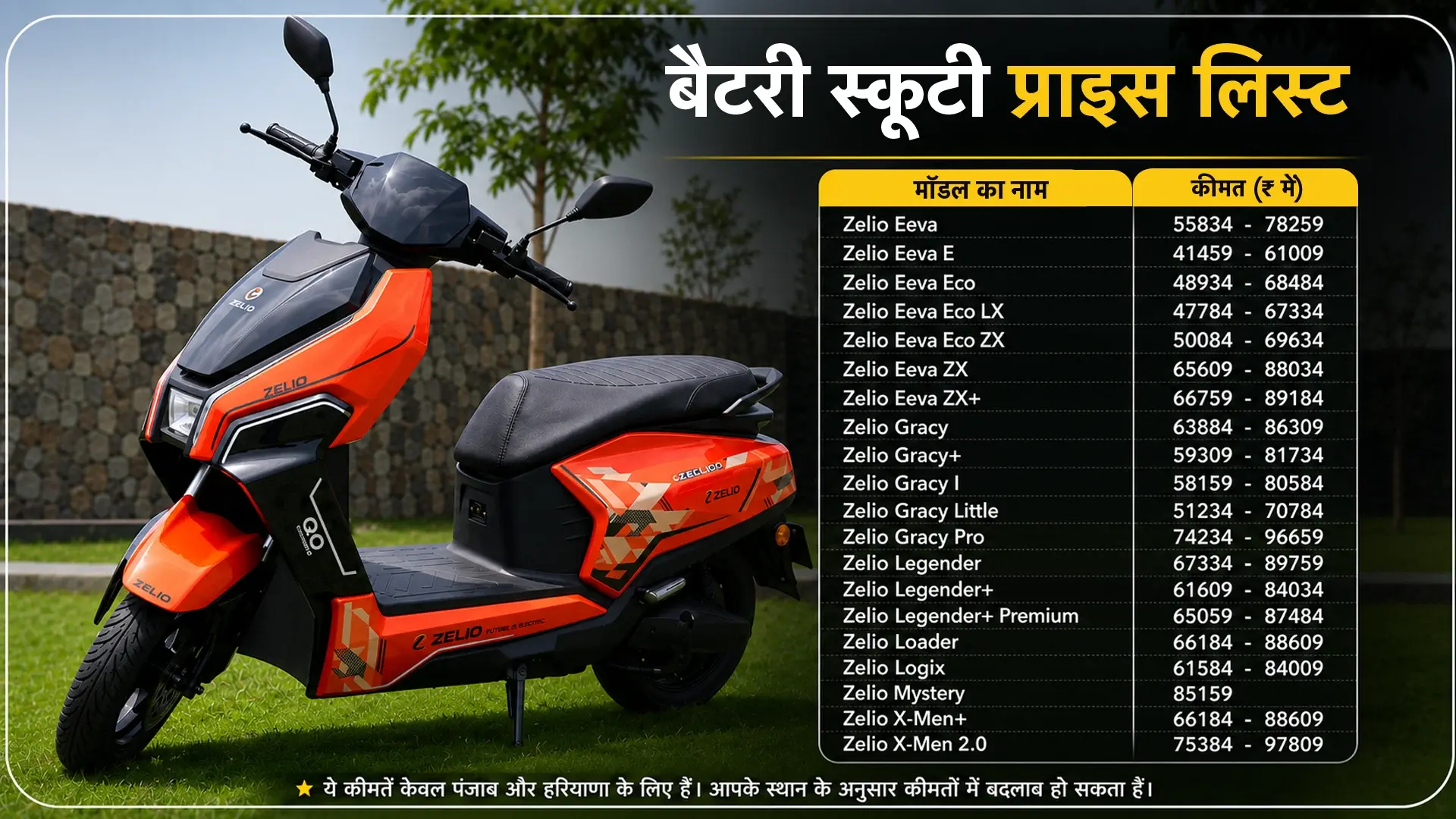
भारत की बेस्ट इलेक्ट्रिक स्कूटर की कीमतों की पूरी लिस्ट (अपडेटेड 2026) भारत में बैटरी स्कूटी की लेटेस्ट प्राइस लिस्ट ढूंढ रहे हैं? आप सही जगह पर आए हैं। इस ब्लॉग को अंग्रेजी में पढ़ने के लिए यहां क्लिक करें । इस गाइड में इलेक्ट्रिक स्कूटी की कीमत, फीचर्स और On-Road कॉस्ट से जुड़ी हर जरूरी जानकारी दी गई है। Zelio की किफायती रेंज से लेकर प्रीमियम ब्रांड्स तक, अपने बजट और जरूरत के हिसाब से सही इलेक्ट्रिक स्कूटर चुनने में यह लिस्ट आपकी मदद करेगी। भारत में इलेक्ट्रिक स्कूटी की कीमत कैसे तय होती है किसी भी बैटरी स्कूटी प्राइस लिस्ट को समझने से पहले यह जानना जरूरी है कि इलेक्ट्रिक स्कूटी की प्राइसिंग किन चीजों पर निर्भर करती है और On-Road प्राइस में असल में क्या-क्या शामिल होता है। On-Road प्राइस में क्या शामिल होता है कॉम्पोनेंट विवरण एक्स-शोरूम प्राइस टैक्स और रजिस्ट्रेशन से पहले स्कूटर की बेस कीमत रोड टैक्स राज्य के हिसाब से अलग, आमतौर पर वाहन कीमत का 2-10%, कई राज्यों में EV पर 100% छूट रजिस्ट्रेशन फीस बैटरी ऑपरेटेड व्हीकल (BOV) को केंद्र सरकार ने RC जारी करने और रिन्यू करने की फीस से छूट दी है इंश्योरेंस थर्ड पार्टी अनिवार्य, कॉम्प्रिहेंसिव कवरेज वैकल्पिक हैंडलिंग चार्ज डॉक्यूमेंटेशन और डिलीवरी के लिए डीलर चार्ज PM E-DRIVE सब्सिडी केंद्र सरकार की सब्सिडी जो असल कीमत घटाती है, मॉडल के हिसाब से अलग-अलग बैटरी स्कूटी प्राइस लिस्ट की कैटेगरी सेगमेंट प्राइस रेंज किसके लिए सही बजट सेगमेंट Rs.25,000 - Rs.50,000 लो-स्पीड स्कूटर (LSEV), छोटी दूरी के लिए, रजिस्ट्रेशन और लाइसेंस जरूरी नहीं, स्टूडेंट्स और गिग वर्कर्स के लिए बेस्ट मिड-रेंज सेगमेंट Rs.50,000 - Rs.1,00,000 एंट्री लेवल हाई-स्पीड स्कूटर, 60-100 किमी रेंज, रोजाना कमाने वालों के लिए बढ़िया, Zelio की ज्यादातर स्कूटी इसी सेगमेंट में आती हैं प्रीमियम सेगमेंट Rs.1,00,000 - Rs.1,50,000 फीचर से भरपूर स्कूटर, बेहतरीन रेंज, स्मार्ट कनेक्टिविटी और अच्छी बिल्ड क्वालिटी हाई-परफॉर्मेंस सेगमेंट Rs.1,50,000 से ऊपर 150+ किमी रेंज, तेज एक्सिलरेशन, एडवांस फीचर्स और प्रीमियम डिजाइन Rs.30,000 के अंदर मिलने वाली ज्यादातर स्कूटी में क्वालिटी और आफ्टर सेल्स सपोर्ट की कमी देखने को मिलती है, इसे लेकर इस गाइड में पूरी जानकारी दी गई है। वहीं अगर बजट थोड़ा बढ़ाकर Rs.50,000 तक ले जाया जाए तो इलेक्ट्रिक स्कूटर अंडर 50000 कैटेगरी में बिल्ड क्वालिटी और वारंटी दोनों भरोसेमंद मिलने लगती हैं। Rs.60,000, Rs.70,000 और Rs.80,000 के बजट में मॉडल की रेंज, ब्रेकिंग सिस्टम और लोड कैपेसिटी लगातार बेहतर होती जाती है, जिसकी पूरी तुलना Rs.60,000 के अंदर बेस्ट इलेक्ट्रिक स्कूटर वाली गाइड में मिल जाती है। Zelio E-Bikes: भारत की सबसे किफायती बैटरी स्कूटी प्राइस लिस्ट देने वाला ब्रांड बैटरी स्कूटी प्राइस लिस्ट में वैल्यू फॉर मनी की बात करें तो Zelio E-Bikes भारत के सबसे तेजी से बढ़ते इलेक्ट्रिक मोबिलिटी ब्रांड्स में से एक है। 2,50,000 से ज्यादा राइडर्स, 350+ डीलरशिप और मॉडर्न मैन्युफैक्चरिंग फैसिलिटी के साथ Zelio किफायत, क्वालिटी और परफॉर्मेंस तीनों साथ लेकर आता है। Zelio क्यों चुनें वजह जानकारी कीमत Rs.47,784 से शुरू, भारत की सबसे किफायती बैटरी स्कूटी प्राइस लिस्ट में से एक मेड इन इंडिया भारतीय सड़कों और मौसम के हिसाब से डिजाइन वारंटी मोटर, कंट्रोलर और फ्रेम पर 2 साल की कॉम्प्रिहेंसिव वारंटी सर्विस नेटवर्क शहरी, अर्ध-शहरी और ग्रामीण इलाकों में 350+ डीलर स्मार्ट फीचर्स डिजिटल स्पीडोमीटर, USB चार्जिंग पोर्ट, कीलेस ड्राइव, एंटी-थेफ्ट अलार्म बिक्री 70,000+ यूनिट बिक चुकी हैं, FY2023 से रेवेन्यू 3 गुना बढ़ा जीरो एमिशन पेट्रोल पर होने वाला खर्च बचाकर पर्यावरण को भी फायदा Zelio बैटरी स्कूटी प्राइस लिस्ट 2026 नीचे Zelio की सभी मॉडल्स की बैटरी टाइप के हिसाब से पूरी बैटरी स्कूटी प्राइस लिस्ट दी गई है। नंबर मॉडल 60V/32AH Lead Acid 60V/42AH Lead Acid 60V/32AH Lithium-ion 1 Zelio Eeva Rs. 55,834 Rs. 62,734 Rs. 72,509 2 Zelio Eeva Eco Rs. 51,809 Rs. 58,709 Rs. 68,484 3 Zelio Eeva Eco LX Rs. 50,659 - Rs. 67,334 4 Zelio Eeva Eco ZX Rs. 52,959 Rs. 59,859 Rs. 69,634 5 Zelio Eeva ZX Rs. 65,609 Rs. 72,509 Rs. 82,284 6 Zelio Eeva ZX+ Rs. 66,759 Rs. 73,659 Rs. 83,434 7 Zelio Little Gracy Rs. 54,109 - Rs. 70,784 8 Zelio Gracyi Rs. 58,159 Rs. 65,059 Rs. 74,834 9 Zelio Gracy+ Rs. 59,309 Rs. 66,209 Rs. 75,984 10 Zelio Gracy Pro Rs. 74,234 - Rs. 90,909 11 Zelio Legender Rs. 67,334 Rs. 74,234 Rs. 84,009 12 Zelio Legender+ Rs. 61,609 Rs. 68,509 Rs. 78,284 13 Zelio Legender+ Premium Rs. 65,059 Rs. 71,959 Rs. 81,734 14 Zelio X Men+ Rs. 66,184 Rs. 73,084 Rs. 82,859 15 Zelio X Men 2.0 Rs. 75,384 Rs. 82,284 Rs. 92,059 16 Zelio LOGIX Rs. 61,584 Rs. 68,484 Rs. 78,259 17 Zelio Logix Loader Rs. 66,184 Rs. 73,084 Rs. 82,859 ये कीमतें सिर्फ हरियाणा और पंजाब मार्केट के लिए हैं, बाकी राज्यों में कीमत अलग हो सकती है। Zelio की टॉप रेकमेंडेशन स्टूडेंट्स और पहली बार खरीदने वालों के लिए: Zelio Little Gracy सिर्फ Rs.70,784 में Zelio Little Gracy भारत की सबसे किफायती Lithium-ion बैटरी स्कूटी है। 60-90 किमी रेंज और हल्के डिजाइन के साथ यह कॉलेज स्टूडेंट्स और छोटी दूरी के लिए एकदम सही है। रजिस्ट्रेशन की भी जरूरत नहीं पड़ती। बेस्ट वैल्यू फॉर मनी: Zelio Eeva Zelio Eeva कीमत और परफॉर्मेंस के बीच सही बैलेंस बनाती है। 90 किमी रेंज और अलग-अलग बैटरी ऑप्शन के साथ यह उन लोगों के लिए बढ़िया है जो बिना ज्यादा खर्च किए रोजाना भरोसेमंद स्कूटी चलाना चाहते हैं। लंबी दूरी के लिए: Zelio Legender ज्यादा रेंज चाहिए तो Zelio Legender एक बार चार्ज में 100-120 किमी चलती है। डिजिटल स्पीडोमीटर, कीलेस ड्राइव और एंटी-थेफ्ट अलार्म के साथ यह रोज लंबी राइड करने वाले प्रोफेशनल्स के लिए सही रहती है। बाकी ब्रांड्स की बैटरी स्कूटी प्राइस लिस्ट Zelio बजट से मिड-रेंज सेगमेंट में सबसे अच्छी वैल्यू देता है, लेकिन 2026 की पूरी बैटरी स्कूटी प्राइस लिस्ट समझने के लिए भारत के बाकी बड़े ब्रांड्स की कीमतें भी जान लेना जरूरी है। हाई-स्पीड इलेक्ट्रिक स्कूटर प्राइस लिस्ट (₹1 लाख से ₹1.5 लाख) ब्रांड और मॉडल एक्स-शोरूम प्राइस दावा की गई रेंज बैटरी कैपेसिटी Zelio Mystery Rs. 85,159 100 किमी 2.09 kWh Brand MQube Rs. 96,422 94 किमी 2.2 kWh Brand hetak Rs. 87,100 113 किमी 2.5 kWh Brand hctiva e: Rs. 1,18,147 102 किमी 1.5 kWh Brand Vizta Rs. 1,04,999 123-159 किमी 2.9-3.7 kWh Brand fida V2 Rs. 1,04,800 143 किमी 3.4 kWh कीमत के अलावा इन बातों पर भी ध्यान दें सिर्फ कीमत देखकर स्कूटी खरीदना सही फैसला नहीं होता। नीचे दी गई बातें भी उतनी ही जरूरी हैं। बैटरी टेक्नोलॉजी और लाइफस्पैन बैटरी टाइप खासियत Lithium-ion हल्की, 3-5 साल तक चलती है, तेज चार्जिंग, कीमत ज्यादा Lead Acid / जेल शुरुआती कीमत कम, वजन ज्यादा, 2-3 साल की लाइफ रिमूवेबल बनाम फिक्स्ड रिमूवेबल में चार्जिंग की आजादी, फिक्स्ड में बेहतर इंटीग्रेशन दोनों बैटरी टाइप में से कौन सी अपने लिए सही है, यह बजट और रोजाना की राइडिंग पर निर्भर करता है, इसकी पूरी तुलना Lead Acid बनाम Lithium-ion बैटरी वाली गाइड में मिल जाती है। जो भी बैटरी हो, उसकी सही देखभाल से लाइफ काफी बढ़ जाती है, इसके लिए बैटरी लाइफ बढ़ाने के तरीके वाली गाइड फॉलो की जा सकती है। असली रेंज बनाम दावा की गई रेंज असली रेंज आमतौर पर दावा की गई रेंज की 60-80% ही होती है। इसे प्रभावित करने वाले कारण: राइडर का वजन और सामान रास्ते की ढलान (पहाड़ी इलाके में रेंज 20-30% तक घट जाती है) स्पीड और राइडिंग स्टाइल मौसम की स्थिति बार-बार ब्रेक और एक्सिलरेशन सर्दी के मौसम में बैटरी की परफॉर्मेंस थोड़ी कम हो जाती है, यही वजह है कि ठंड में इलेक्ट्रिक स्कूटर शुरू होते वक्त थोड़ा धीमा क्यों महसूस होता है इसे समझना भी उतना ही जरूरी है। चार्जिंग टाइम और इंफ्रास्ट्रक्चर चार्जिंग टाइप समय स्टैंडर्ड होम चार्जिंग 4-5 घंटे फास्ट चार्जिंग (प्रीमियम मॉडल) 0-80% सिर्फ 2-4 घंटे में पोर्टेबल चार्जर रिमूवेबल बैटरी के लिए जरूरी पब्लिक चार्जिंग अभी सीमित लेकिन तेजी से बढ़ रही है टोटल कॉस्ट ऑफ ओनरशिप (TCO) फैक्टर जानकारी खरीद कीमत On-Road कॉस्ट बिजली का खर्च प्रति चार्ज Rs.0.50 - Rs.1.50 मेंटेनेंस पेट्रोल स्कूटी से 70% कम बैटरी रिप्लेसमेंट 3-5 साल बाद Rs.10,000 - Rs.70,000 इंश्योरेंस EV के लिए थोड़ा सस्ता रीसेल वैल्यू लगातार बेहतर हो रही है कम खरीद कीमत, मामूली मेंटेनेंस और 2 साल की वारंटी के साथ Zelio के मालिक 5 साल में पेट्रोल स्कूटी के मुकाबले Rs. 2-3 लाख तक बचा सकते हैं। पेट्रोल स्कूटी छोड़कर इलेक्ट्रिक की तरफ जाना 2026 में असल में कितना फायदेमंद है, इसे यहां विस्तार से समझा गया है । किसी भी बैटरी स्कूटी प्राइस लिस्ट को सिर्फ खरीद कीमत के आधार पर मत आंकिए, TCO ही असली तस्वीर दिखाता है। लो-स्पीड और हाई-स्पीड स्कूटी में फर्क लो-स्पीड इलेक्ट्रिक स्कूटी को न रजिस्ट्रेशन चाहिए न ड्राइविंग लाइसेंस, यही वजह है कि इसे अक्सर नॉन RTO स्कूटर कहा जाता है। दूसरी तरफ हाई-स्पीड स्कूटी को पेट्रोल स्कूटी की तरह RTO रजिस्ट्रेशन और लाइसेंस दोनों की जरूरत होती है। Zelio की Eeva, Little Gracy और Gracyi जैसी ज्यादातर स्कूटी लो-स्पीड कैटेगरी में आती हैं, वहीं Mystery जैसे मॉडल हाई-स्पीड सेगमेंट में गिने जाते हैं। नजदीकी Zelio डीलर से कैसे ढूंढें अगर टेस्ट राइड लेनी हो या कीमत को अपने राज्य के हिसाब से कन्फर्म करना हो तो Zelio डीलर लोकेटर से नजदीकी शोरूम का पता लगाया जा सकता है। निष्कर्ष यह बैटरी स्कूटी प्राइस लिस्ट आपको बजट, रेंज और फीचर्स के हिसाब से सही मॉडल चुनने में मदद करती है। चाहे बजट Rs.50,000 का हो या Rs.1.5 लाख का, इस लिस्ट में हर सेगमेंट के लिए भरोसेमंद ऑप्शन मौजूद है। कीमत कन्फर्म करने और टेस्ट राइड के लिए नजदीकी Zelio डीलर से संपर्क करना सबसे सही तरीका है।
Is Buying an Electric Scooter in 2026 Really Worth It?
For most people asking this question, the answer is simpler than the internet makes it sound. If you ride mostly inside a city or a town, both the numbers and the everyday experience point the same way. There is a smaller group of riders for whom things are less clear and it is only fair to talk about them honestly instead of pretending they do not exist. The Running Cost Math Still Favours Electric Nobody can really argue with this part anymore because the numbers have not shifted back towards petrol. An electric scooter usually costs around a quarter of a rupee per kilometre to run. A petrol scooter sits closer to two and a half rupees per kilometre at current fuel prices. For someone riding thirty five kilometres a day, that gap turns into real money by the end of the year, not something you barely notice on a receipt. Then there is maintenance. An electric motor has far fewer moving parts than a petrol engine, so there is no oil to change, no clutch to wear out and fewer reasons to visit a mechanic in general. Stretch that across three or four years of ownership and the saving on upkeep starts to matter almost as much as the saving on fuel. On top of all that, a good number of electric scooters in India also skip road tax and registration fees entirely, a saving that a lot of buyers only discover once they sit down and look at the actual RTO charges and road tax rules that apply to a petrol scooter in their state. Check the latest on-road prices for all Zelio scooter models at the battery scooty price list . What Has Changed for the Better by 2026 A few years back, the complaints people had about electric scooters in India made sense. Range felt tight. Charging away from home was a gamble. Some early models struggled on Indian roads. Much of that has quietly been fixed. Most electric scooters today carry a certified range that looks generous on paper, but real-world range in Indian city traffic, with pillion weight, traffic light stops and monsoon drag, typically lands around sixty to eighty percent of that certified figure. Even after that drop, most riders still end up covering enough distance for their daily commute without giving it much thought. Charging at home has also become the normal way people do it, since almost every scooter now plugs into a regular household socket overnight. And if you would rather skip the entire licence and registration process, what is often called a non-RTO scooter still lets you do exactly that, legally and with no paperwork involved. Where the Real Limitations Still Sit None of this means every problem has been solved and it would not be fair to pretend otherwise before someone spends their own money. Charging outside major cities is still patchy. If your daily life involves long, unplanned rides through areas with limited charging support, an electric scooter asks more planning of you than a petrol one does right now. Weather plays its part too. A cold morning slows a battery down until it warms up through use and a hot afternoon puts a different kind of strain on the cells. Neither of these comes down to one brand doing something wrong. It is just how lithium batteries behave. If your daily distance regularly goes past what your scooter can realistically cover, you end up planning your day around a charge instead of the other way round. Who Should Actually Make the Switch If you ride somewhere between fifteen and fifty kilometres a day, mostly inside a city or town and you have a place to plug in overnight, this is about as good a time as any to switch. Students, daily office commuters, delivery riders working local routes and people running errands around town are usually the ones who gain the most. If your riding regularly means long, unpredictable highway stretches with no charging point in sight, it makes sense to wait a while or look at a longer range model built for that kind of use, rather than assuming every electric scooter suits every kind of ride. This is also where a properly registered high-speed scooter, the kind that actually needs RTO registration and a driving licence the same way a petrol scooter does, tends to make more sense than a low speed model. A Few Zelio Scooters to Consider If everything above has you leaning towards electric, a few Zelio models fit different kinds of riders. The Zelio Gracy i is the one most daily commuters end up with, offering a solid mix of range, price and reliability for typical city use. The Zelio Little Gracy suits someone who wants something lighter to handle through narrow streets and tight parking. For riders covering longer distances every day, the Zelio Legender+ Premium carries a bigger battery built for exactly that. Every low speed model in Zelio's range skips the driving licence and RTO registration process and the low speed versus high speed guide explains exactly how that works. Whichever scooter you choose, the habits that keep a battery healthy over the years matter just as much as the scooter itself, especially through the kind of temperature shifts covered in why an electric scooter can feel a little slower on a cold morning .
Why Your Electric Scooter Beeps Before It Even Starts Moving
Turn the key on any electric scooter and before it moves an inch you will hear a short beep. Most of us have heard it hundreds of times without ever wondering what it actually means. It is not there for effect. That little beep is your scooter finishing a job behind the scenes, one it needs to complete before it lets you ride. The Scooter Checks Itself Before It Lets You Ride An electric scooter runs on a small set of parts that all need to agree with each other before power reaches the wheel. The battery pack has its own management system watching voltage, current and temperature. The controller sits between the battery and the motor deciding how much power to send and when. The throttle and brake each carry their own sensors telling the controller what the rider is doing at that exact moment. When you switch the scooter on, all of these parts run through a quick check. The controller confirms the throttle is sitting at rest and has not been left twisted or stuck. It confirms the brake lever is in its normal position rather than jammed. It also confirms it is receiving a proper signal from the battery's management system rather than silence or a fault code. Only once every one of these checks comes back clean does the scooter let itself move. The beep you hear is the sound of that checklist finishing. One short clean beep almost always means everything passed and the scooter is ready. If you have heard several beeps in a row instead of one that is usually the system telling you something specific did not check out cleanly. Most often it is a brake lever that has not fully returned to its resting position or a throttle that was accidentally engaged before the scooter powered on. Check the latest on-road prices for all Zelio scooter models at the battery scooty price list . Why This Matters More on an Electric Scooter Than a Petrol One A petrol engine announces itself the moment it starts. There is no mistaking that a scooter with a combustion engine is switched on and capable of moving. An electric motor does not give you that same warning. At low speed in particular it can be close to silent, which is a genuine safety concern for pedestrians who rely on sound to notice a vehicle before they see it. That silence is the reason regulators in several countries now require electric vehicles to carry some form of audible warning system. Electric drivetrains simply produce far less noise than combustion engines at low speed, so manufacturers had to build sound back into the experience rather than remove it entirely. The startup beep plays a small part in this. It tells you the scooter is live and ready to move. In a quiet parking area it can just as easily let someone standing nearby know the scooter next to them is no longer switched off. Keyless Systems Add a Second Sound to Listen For If your scooter has a keyless drive system that startup beep often arrives paired with the confirmation tone of the lock releasing. The two sounds happen so close together that most riders hear them as one, though they are actually doing two separate jobs. One confirms the security system has recognised you and unlocked the drivetrain. The other confirms the internal check has passed and the scooter is genuinely ready to move rather than just unlocked. This is part of why an electric scooter with an anti-theft alarm is harder to simply push away and ride off with. Without the correct startup sequence completing successfully the drivetrain never actually engages, no matter who has physically picked the scooter up. The Beep Can Sound a Little Different on a Cold Morning If you have noticed the startup sound taking a fraction longer to appear on a cold morning you are not imagining it. A battery running at a lower temperature takes a little longer to confirm a stable reading to the controller. This is the same reason electric scooters feel a touch slower to respond on cold mornings before they have had a chance to warm through. A Few Zelio Scooters and How This Plays Out on Each Every Zelio scooter runs through the same self check sequence before it lets the rider move. The battery management system behind that check keeps working quietly in the background throughout the ride, not just at startup. The Zelio Gracy i comes with keyless drive and an anti-theft alarm, so the startup sequence also confirms the security system before the drivetrain engages. The Zelio Little Gracy runs the same check in a lighter, more compact build suited to shorter city rides. For riders who want something built around longer daily distances, the Zelio Legender+ Premium carries a larger battery through the same startup process, with the management system watching a bigger pack instead of a smaller one. Sources Wikipedia, "Electric vehicle warning sounds" Electric Scooter Car, "Electric Scooter Troubleshooting Fix: No Power, Charging and Battery Fixes"
Why Your Electric Scooter's Range Number Never Matches What You Actually Get
The brochure said ninety kilometres. Your scooter has never once come close to that on a single charge, and by now you have probably started to wonder whether something is wrong with your battery. Nothing is wrong. This gap between the number printed on a spec sheet and the distance a rider actually covers is one of the most consistent complaints in electric mobility, and it exists for reasons that have very little to do with the quality of the scooter you bought. Understanding where that number comes from changes how you read every future spec sheet, and it stops the range indicator from feeling like it is lying to you. What That Claimed Figure Actually Represents The range printed on an electric scooter's box comes from a certified test, usually carried out on a dynamometer by an authorised testing agency rather than on an actual road. The vehicle runs at a fixed, steady speed with no traffic signals, no braking, no wind resistance, and no gradient to climb. The rider used in these tests tends to be light, the tyres are at ideal pressure, the battery is brand new, and the ambient temperature sits at a comfortable level that neither strains the battery nor helps it. India moved from an older single-cycle test to a combined urban and extra urban testing method a few years back, specifically to bring these numbers closer to how people actually ride. Even with that change, a laboratory can only simulate so much. It cannot simulate a red light every four hundred metres, a pothole that forces a sudden brake, or the particular way you twist the throttle when you are running late. That printed number was never a promise. It was always a best case, measured under conditions almost nobody rides in every single day. Check the latest on-road prices for all Zelio scooter models at the battery scooty price list . The Gap Is Real, and It Is Larger Than Most Riders Expect Independent testing across several popular electric scooters has found real-world range typically landing somewhere between seventy and eighty five percent of the claimed figure, with some scooters falling well below that depending on how they are ridden. One well known scooter advertised a certified range in the high hundreds of kilometres, yet its own manufacturer's real-world figure, measured in the most efficient riding mode, came in over twenty percent lower, and dropped further still once a rider switched to a faster mode. If you want a rough planning number that has held up across multiple independent tests, multiplying the claimed range by roughly seven tenths gets you close to what most riders should expect on an average day. It is not exact, but it saves you from planning a route around a number that was never realistic in the first place. What Actually Eats Into Your Range A handful of everyday factors are responsible for almost the entire gap, and none of them are unique to your scooter. Your weight and whatever you are carrying - The test rider used for certification is deliberately light. A heavier rider, a filled grocery bag hanging off the handlebar, or a passenger riding pillion all mean the motor works harder to move the same distance, which drains the battery faster than the lab figure accounts for. Stop and start traffic - Every red light, every slow crawl through a market, and every sudden brake costs you energy that a steady, uninterrupted lab test never has to spend. Indian city traffic is almost the opposite of the conditions a range figure is measured under. How you use the throttle - Gentle, gradual acceleration sips power. Aggressive acceleration away from every signal, or riding at the scooter's top speed instead of a moderate one, pulls noticeably more current from the battery for the same distance covered. Gradient and terrain - Climbing even a mild flyover or a sloped road takes more energy than flat ground, and that energy does not fully come back to you on the way down, unlike what regenerative braking marketing sometimes implies. Temperature - Both extremes work against you. A battery performing at its coldest, on those mornings when it takes a few kilometres just to feel normal again , delivers less usable range until it warms through from riding. Extreme heat causes its own separate strain on the cells. Tyre pressure and general upkeep - Underinflated tyres increase rolling resistance, which is a fancy way of saying the motor has to push harder for the same result. This is one of the few factors on this list that is genuinely within your control on a weekly basis. Battery age - A two year old battery simply does not hold the same charge it did on day one. This is normal chemical wear, not a defect, though good charging habits over the years slow that decline considerably. Every one of these factors stacks on top of the others - On a hot, heavy traffic day with a pillion rider and slightly soft tyres, do not be surprised if your real range sits well under what a single one of these factors alone would suggest. Why This Matters More on a Low Speed Scooter If you ride one of the low speed electric scooters that need no licence and no RTO registration , range behaviour tends to feel a little more forgiving day to day, simply because these scooters are not being pushed toward high speed cruising in the first place. A scooter capped around twenty five kilometres an hour naturally avoids the steep power draw that comes with sustained high speed riding, which is one of the biggest range killers on faster registered scooters. That does not mean the gap between claimed and real figures disappears entirely, but it tends to be a gentler drop rather than a dramatic one. What Range Can You Expect from Zelio Scooters? Zelio builds its electric scooters in India, with manufacturing spread across facilities in Haryana, Odisha, and Tamil Nadu, and every battery goes through testing under real riding conditions rather than only inside a laboratory. That approach matters here specifically, because a range figure tested closer to how Indian roads actually behave tends to hold up better once a scooter reaches an actual rider's daily commute. Range figures across Zelio's lineup are built around realistic city use rather than a single flattering number, which is why most models are quoted with a range rather than one optimistic peak figure. The Zelio Gracy i is rated between sixty and ninety kilometres depending on the battery variant, and in everyday city commuting most riders land comfortably within that band without chasing the upper limit. The Zelio Little Gracy is built lighter and suits shorter city routes, where stop and start traffic has less time to eat into the charge before you are home again. For riders covering longer daily distances, the Zelio Legender+ Premium carries a larger battery specifically to absorb the kind of real-world losses described above, so the range that actually matters, the one you experience on your commute, still holds up at the end of the day. Getting a Number You Can Actually Trust The only range figure worth planning around is the one you measure yourself. Charge fully, ride your normal route for a week, note the distance covered before the battery needs charging again, and you will have a far more honest baseline than anything printed on a spec sheet. That number will still shift a little with the seasons, since a battery riding through a cold December morning behaves differently from the same battery in April, but it will be grounded in how you actually ride rather than how a machine rode it in a lab. And the habits that protect a battery's long term health , avoiding deep discharges, charging with the right equipment, keeping it out of extreme heat, are the same habits that keep your real-world range closer to its best for years rather than months. Sources BikeDekho, "Here's What IDC Range Means In Electric Two-Wheelers" ZigWheels, "EV Simplified: Claimed Vs Real-world Range Of Two-wheelers" E-Vehicle Info, "What Is ARAI Range In EV And How Is It Measured?" RiderGuide, "Electric Scooter Range: Claimed vs Tested Across 12 Models"
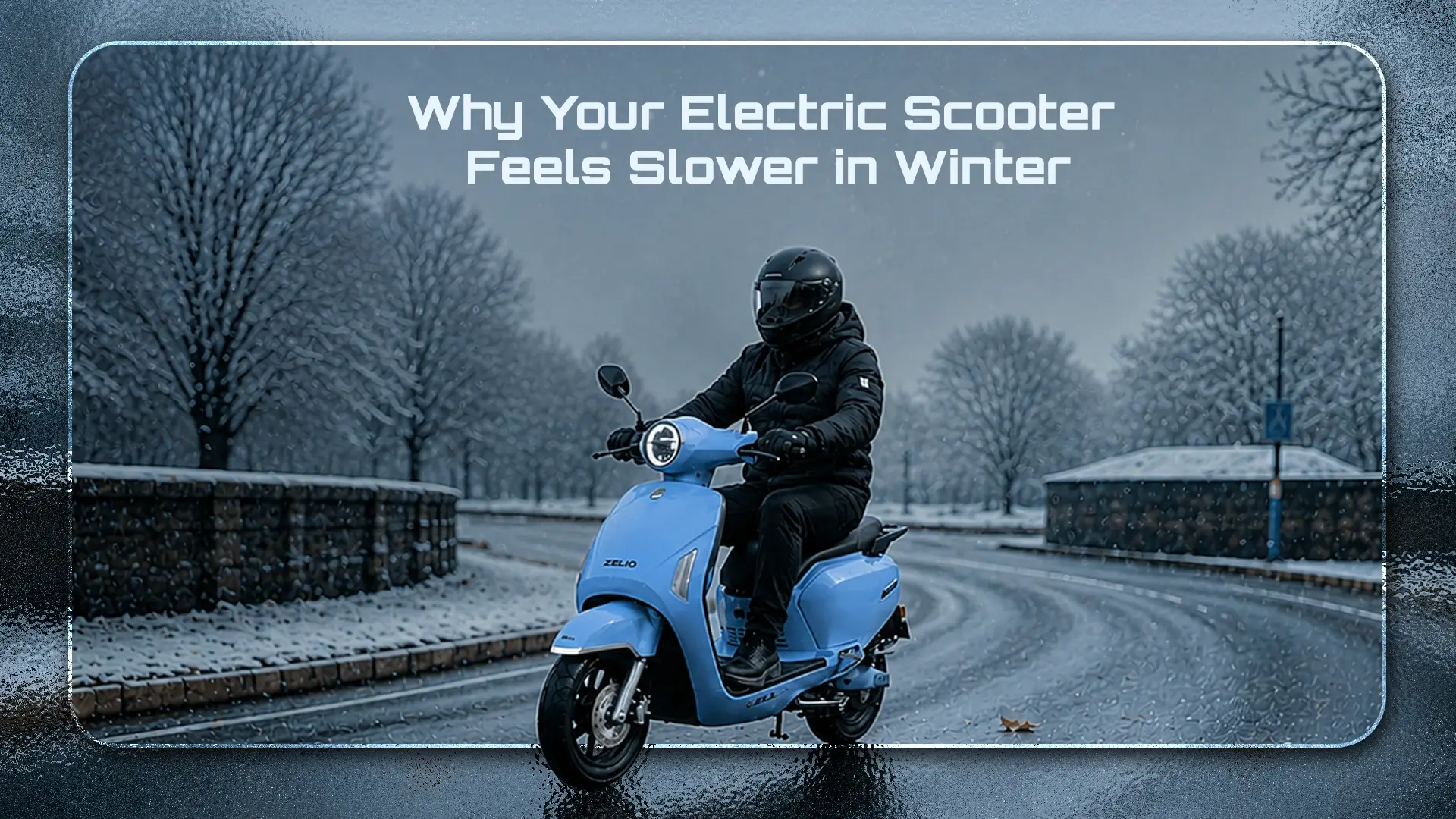
Why Electric Scooters Feel Slower in Winter - The Real Reason
It's a cold winter morning. You start your scooter, twist the throttle, and immediately feel that something isn't quite the same. The pickup feels a little slower, climbing a flyover takes a bit more effort, and the battery percentage seems to be dropping faster than usual. If you've ever wondered, "Did something happen to my scooter overnight?" you're not alone. The good news is that it's usually nothing to worry about. Cold weather affects every electric scooter battery, so what you're noticing is completely normal during winter. What's Actually Going On Inside the Battery Your scooter's battery runs on a simple chemical process. Lithium ions move back and forth through a liquid called electrolyte, and that movement is what generates the power that turns your wheels. In warm weather, this happens quickly and smoothly. Cold changes the texture of that electrolyte. It thickens, almost like honey pulled straight from the fridge instead of left on the counter. Ions that would normally zip through now move sluggishly. The battery has to work harder to push out the same amount of power and it just can't do it as fast. There's a technical term for this: internal resistance goes up when it's cold. Some lab tests have found resistance can jump by roughly five times when temperature drops from a comfortable room level down to close to freezing. That's not a small shift. It's the difference between a battery that responds instantly and one that hesitates. None of this means your cells are damaged. Nothing has degraded. Warm the battery back up, whether that's from the sun coming out or simply riding for ten minutes, and it starts behaving normally again. Why This Feels Worse First Thing in the Morning If your electric scooter feels slower during the first few minutes of your morning ride, that's completely normal. After sitting in the cold overnight, the battery starts the day at a lower temperature. As you ride, it gradually warms up, allowing it to deliver power more efficiently. That's why the scooter often feels more responsive after a few kilometres. This is also why a short 2 to 3 km trip can feel slower than a longer commute. The battery simply doesn't get enough time to warm up. How Much Range Are We Actually Talking About Numbers vary depending on how cold it gets and how the battery is built, but studies on lithium-ion batteries in general have found range or power drops anywhere from 10 to 40 percent in cold conditions, with the steepest losses showing up closer to freezing point. Most of North India doesn't see those extremes. A winter morning in Punjab, Haryana, or Delhi typically sits somewhere between 5 and 12 degrees Celsius, cold enough to notice a dip, not cold enough to see the worst of it. Expect somewhat reduced pickup and a slightly shorter range on your coldest mornings, easing off as the day warms up. Check the latest on-road prices for all Zelio scooter models at the battery scooty price list . Charging Slows Down Too and That's Deliberate You might also notice your scooter takes a little longer to charge fully on a cold night. This isn't a fault either. It's the battery protecting itself. Pushing a fast charge into a cold battery can cause a problem called lithium plating, where metal builds up on the battery's internal surface instead of charging properly. Over time, that damages the cells. To avoid this, a well-built battery management system automatically slows the charging rate when it senses the battery is cold, trading a bit of speed for a battery that lasts years longer. What You Can Actually Do About It You can't change the weather, but a few small habits make a real difference through winter. Park somewhere sheltered overnight if you can, even just under a covered area rather than fully exposed outside. A few degrees warmer at the start of the day genuinely helps. Give the scooter a short warm up ride before you push it hard, especially before climbing an incline or carrying extra weight. Charge indoors where possible rather than in an open, unheated space. A battery that starts its charge cycle a little warmer accepts charge more efficiently. Don't panic if the range indicator looks lower than usual first thing in the morning. Ride a few kilometres and check again. It usually corrects itself. A Few Zelio Scooters Worth Knowing About If you are buying your first electric scooter and winter performance is on your mind, a few things are worth looking at directly with a dealer: battery type, how the battery management system handles cold starts, and how the scooter has performed for other riders through past winters. The Zelio Gracy i is a solid everyday option with dependable range across seasons. If you want something lighter and easier to manage on shorter city routes, the Zelio Little Gracy handles that well. And for riders who need longer range on a single charge, the Zelio Legender+ Premium is worth a look. To get more life out of whichever battery you choose, our guide on extending your electric scooter's battery life has practical tips that apply across all seasons, not just winter. Sources U.S. Department of Energy - Vehicle Technologies Office, research on temperature effects on EV batteries Consumer Reports, "How Much Do Cold Temperatures Affect an EV's Driving Range" PBS News, "Cold weather can cut electric vehicle range and make charging tough" ArXiv research paper, "From Range Loss to Recovery: Cold Weather Challenges and Design Strategies for Commercial Electric Vehicle Fleets"
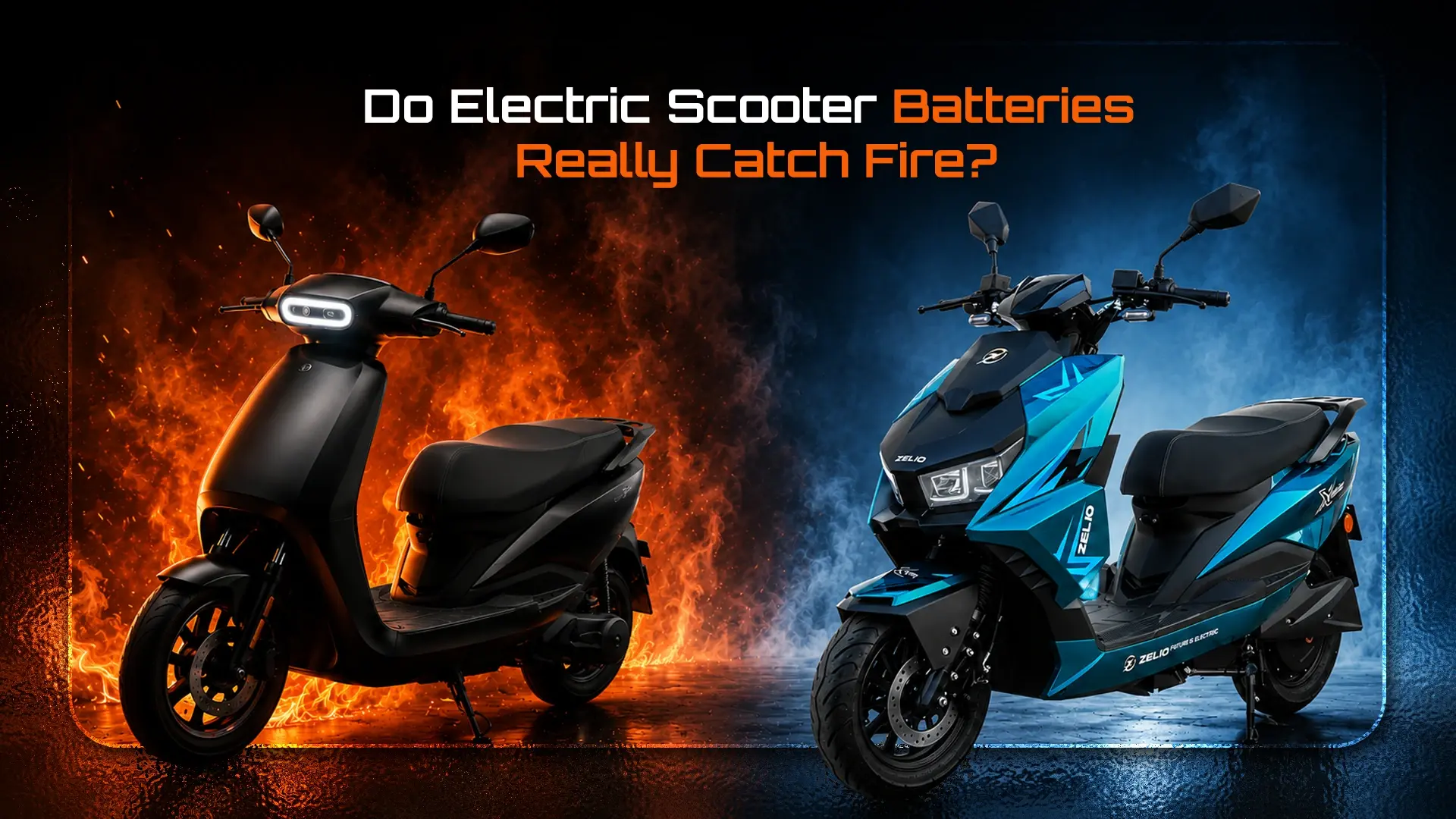
Do Electric Scooter Batteries Really Catch Fire? Here's the Honest Answer
Yes, it has happened. A few years ago, videos of scooters catching fire were all over social media, and some of those incidents ended in real tragedy. We are not going to dance around that. But the honest answer needs the full picture too, because "yes, it happened" and "you should worry every time you plug in your scooter" are two very different things. Here is what actually causes these fires, how often they really happen compared to what most people assume, and what genuinely keeps you safe. What Actually Happens Inside a Battery When It Catches Fire Every lithium-ion battery, whether it is in a scooter, a phone, or a laptop, packs a large amount of energy into a small space. Normally that energy comes out slowly and safely. A fire starts when something upsets that balance and the battery slips into what is called thermal runaway. In simple terms, if a cell inside the battery gets damaged, overheated, or was made with a flaw to begin with, it can short circuit from the inside. That short circuit creates heat. The heat sets off a reaction that creates even more heat, and that heat spreads to the cell sitting right next to it. Once this chain starts, the battery heats up faster than it can cool down, and that is when you see smoke and then flames. This is not unique to scooters. It is the same basic process behind battery fires in phones and laptops too. A scooter just holds a lot more of these cells packed close together, which is why it looks far more dramatic when it happens. What Actually Sets It Off in Real Scooters A handful of specific things tend to cause this, and none of them are a mystery once you know what to look for. Poor quality battery cells. Some past fire cases were traced back to cells that were never properly tested for Indian heat and road conditions before they were fitted into a scooter. Overcharging or charging left unattended for too long. Leaving a scooter plugged in far past what it needs, especially overnight with no one keeping an eye on it, puts stress on cells that a good system should already be preventing. Physical damage. A battery that has been dropped, punctured, or knocked around in a fall can develop a fault that does not show up right away. Sometimes the fire happens hours or even days later. Too much heat. Charging a scooter right after it has come in from a long ride in peak summer, or leaving it parked in direct sun for hours, pushes the battery closer to its limit. Fast charging on a hot day. Rapid charging naturally creates more heat than a normal charge. Doing that on an already hot day is one of the more avoidable risks. Unauthorised repairs. A battery pack opened up and fixed outside a proper service centre, usually to save a bit of money, is one of the more common causes flagged in past investigations. Check the latest on-road prices for all Zelio scooter models at the battery scooty price list . How Common Is This, Really This is the part most conversations skip, and it changes the picture quite a bit. Fire data collected around the world, drawing on transportation safety agencies and fire departments, shows electric vehicles catching fire at roughly 25 incidents for every 100,000 vehicles sold. Petrol and diesel vehicles sit at around 1,500 per 100,000, and hybrid vehicles, which carry both a fuel tank and a battery, actually come out worst at around 3,400 to 3,500 per 100,000. In plain terms, a petrol vehicle is far more likely to catch fire than an electric one. The difference is that petrol fires happen often enough that nobody films them anymore. A small number of electric scooter fires a few years ago, some fatal, spread quickly online because they were new and visually dramatic, and that shaped how people feel about this far more than the actual numbers support. That is not an excuse for the incidents that did happen, and the risk is not zero. But the worry should match the real risk, not how many times a clip has been shared. What Has Changed Since Then That earlier wave of fires was a genuine wake up call for the industry, and it led to real regulatory change, not just public statements. Battery testing requirements got a lot stricter. Manufacturers were pushed toward a tougher safety standard that requires batteries to survive vibration testing, thermal shock, mechanical drop tests, short circuit simulations, and controlled overcharge and discharge testing before they can be sold in a vehicle in India. More recently, an even tighter standard was introduced specifically covering the powertrain components of electric two-wheelers. The direction is clear. Every fire that made headlines pushed regulators to close a gap that some manufacturers had been getting away with. What Actually Keeps You Safe as a Rider Most of what protects you comes down to habit, not luck. Always use the charger that came with your scooter. A mismatched or third-party charger is one of the easiest ways to push a battery beyond what it was built to handle. Give the battery a few minutes to cool down after a long, hot ride before you plug it in, especially during peak summer. Do not leave your scooter charging for hours longer than it needs, particularly overnight in a closed room with poor airflow. If your scooter has taken a fall or been in a collision, get the battery checked before charging it again, even if nothing looks damaged on the outside. Get repairs done only at a proper service centre. A cheaper local fix on a battery pack rarely saves you money in the long run. Watch for warning signs. A battery that feels unusually hot, looks swollen, or shows any leakage should be checked immediately instead of charged again out of convenience. Zelio Scooters Built With This in Mind Every Zelio scooter goes through real world testing on Indian roads in Indian heat before it reaches a rider, not just controlled lab conditions. The battery management system tracks individual cell voltage and temperature throughout every ride, not just at charging time, which is what actually keeps a battery pack healthy over the years. If you are looking at options right now, the Zelio Gracy i is a solid everyday pick with a strong balance of range and reliability. For a lighter, easier to handle option, the Zelio Little Gracy works well for shorter city rides. And if range matters most to you, the Zelio Legender+ Premium covers longer distances comfortably on a single charge. To keep your battery running safely and lasting longer no matter which model you choose, our guide on extending your electric scooter's battery life covers the daily habits that matter most.
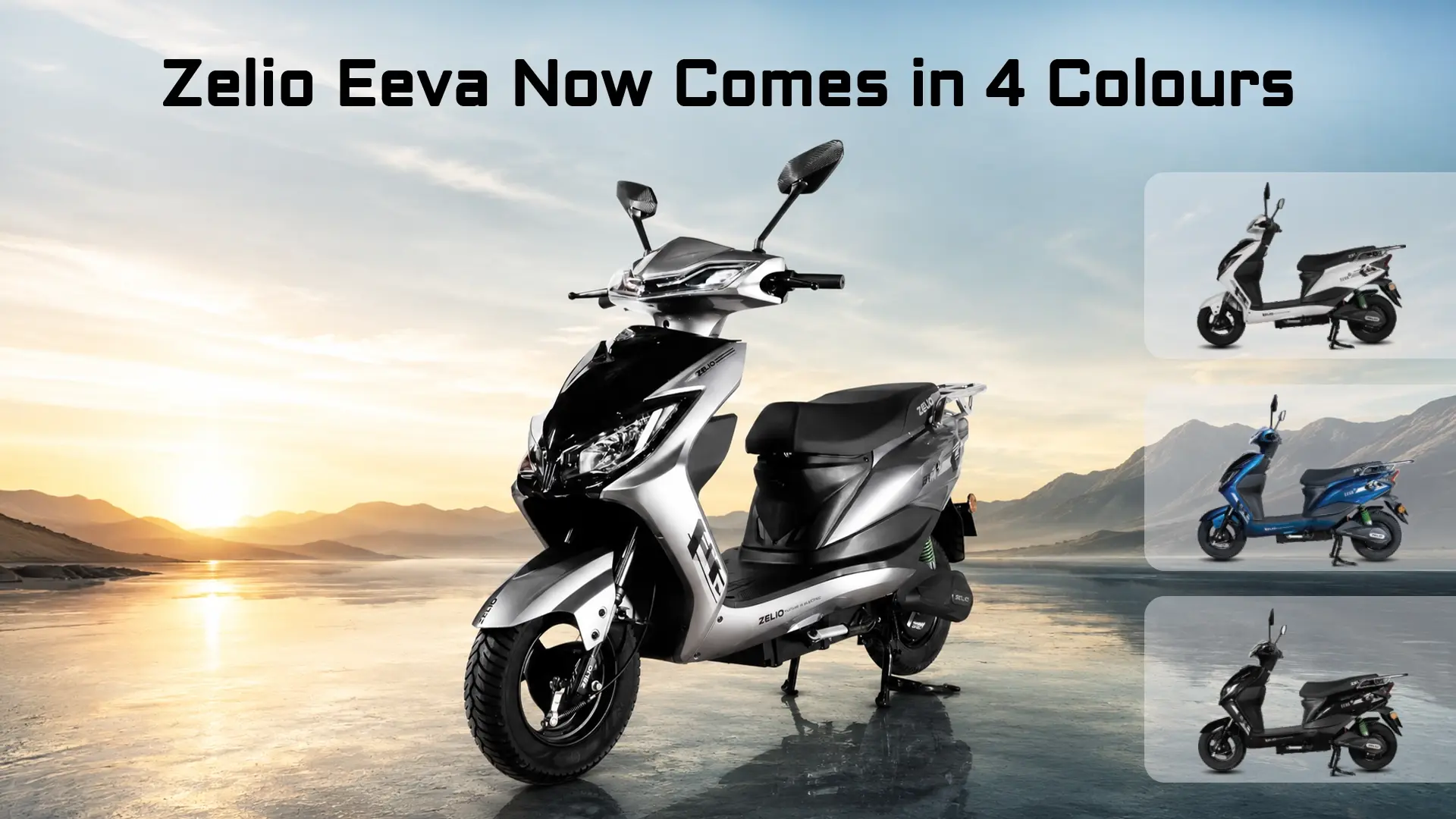
Zelio Eeva Now Comes in 4 Colours - Here's What Else Changed
If you liked the Zelio Eeva but always wanted more colour options, you now have them. The Eeva is available in four colours, along with a few small updates that make it feel fresher without changing what already worked well. Here is a full look at what's new, what stayed the same, and where it fits if you are shopping for a daily scooter right now. The 4 New Colours The Eeva now comes in white and silver dual tone, a deep green paired with black, a clean all-white finish, and a bold blue. That is a good range of options for a scooter in this price bracket. Most electric scooters at this price stick to two or three safe colours. Zelio has picked four options that feel distinct from each other, not just four shades of the same idea. If you park this scooter outside your college , your office , or your building every day, having a colour that actually feels like yours makes a small but real difference. What's New Besides the Colours The bigger change is the digital speedometer. Earlier versions of the Eeva used a simpler display. Now every rider gets a proper digital speedometer, which makes checking your speed and battery level a lot easier at a glance, especially in traffic when you do not want to be squinting at a small dial. Zelio describes this version as "ideal for all types of riders," and going by the spec sheet, that holds up. The scooter feels light and manageable whether you are riding for the first time or you have been on scooters for years. Zelio Eeva - Specs, Price and What You Get Zelio Eeva | Price: Rs 55,834 (60V/32AH Lead Acid) | Range: 60-90 km | Motor: 60/72V BLDC | Licence: No Rs 55,834 gets you a scooter that covers all the basics well. The Eeva N runs on a Gel battery (60V or 72V, 32AH or 42AH) or a Lithium battery (60V/30AH or 74V/32AH). The Lithium option costs a bit more but charges faster and lasts longer over time. Either way, a few simple charging habits make a real difference, and our guide on extending your electric scooter's battery life covers what to do and what to avoid. The 60/72V BLDC motor is smooth and low maintenance, built for everyday city riding rather than speed. Since it is a low speed scooter, it also falls under the no licence, no RTO registration category, so you can ride it home the same day you buy it, no paperwork involved. Our low speed vs high speed electric scooter guide explains exactly how that classification works if you want to know more. Running cost comes to roughly 1.5 units of electricity per full charge, which makes it one of the cheapest ways to get around in India right now. You get drum brakes on both wheels, 90-90/12 tyres front and rear for a stable ride, and hydraulic suspension on both ends that handles potholes and speed breakers noticeably better than basic spring setups. Along with that, the Eeva N comes with a centre lock and anti-theft alarm, a USB charging port, a proper footrest, keyless drive, an LED headlamp, and more foot space than you would expect at this price. All of it comes with Zelio's standard 2 year warranty on the motor, controller, and frame. Price is ex-showroom, Haryana and Punjab, June 2026. Explore Zelio Eeva N Check the latest on-road prices for all Zelio scooter models at the battery scooty price list . Who Should Actually Buy This If your daily ride falls somewhere between 15 and 30 kilometres, the Eeva's 60 to 90 km range on a single charge means you are not thinking about charging every single day. Students, working professionals with a short office commute, and anyone who wants a scooter that does not need a licence will find this an easy choice. For a broader look at what makes a scooter genuinely good for everyday commuting, our guide to the best electric scooter for daily commute is worth reading, and if you want to compare prices across regions, our electric scooter price list for Delhi is a good place to check. Being a low speed scooter also means less to deal with overall. No RTO visits, no licence tests, no road tax. You buy it, charge it at home, and ride. Zelio has 360+ authorised dealers across 25+ states. Use the dealer locator to find your nearest Zelio authorised dealer. Then Walk in, take a test ride, and find the right scooter for your daily commute.
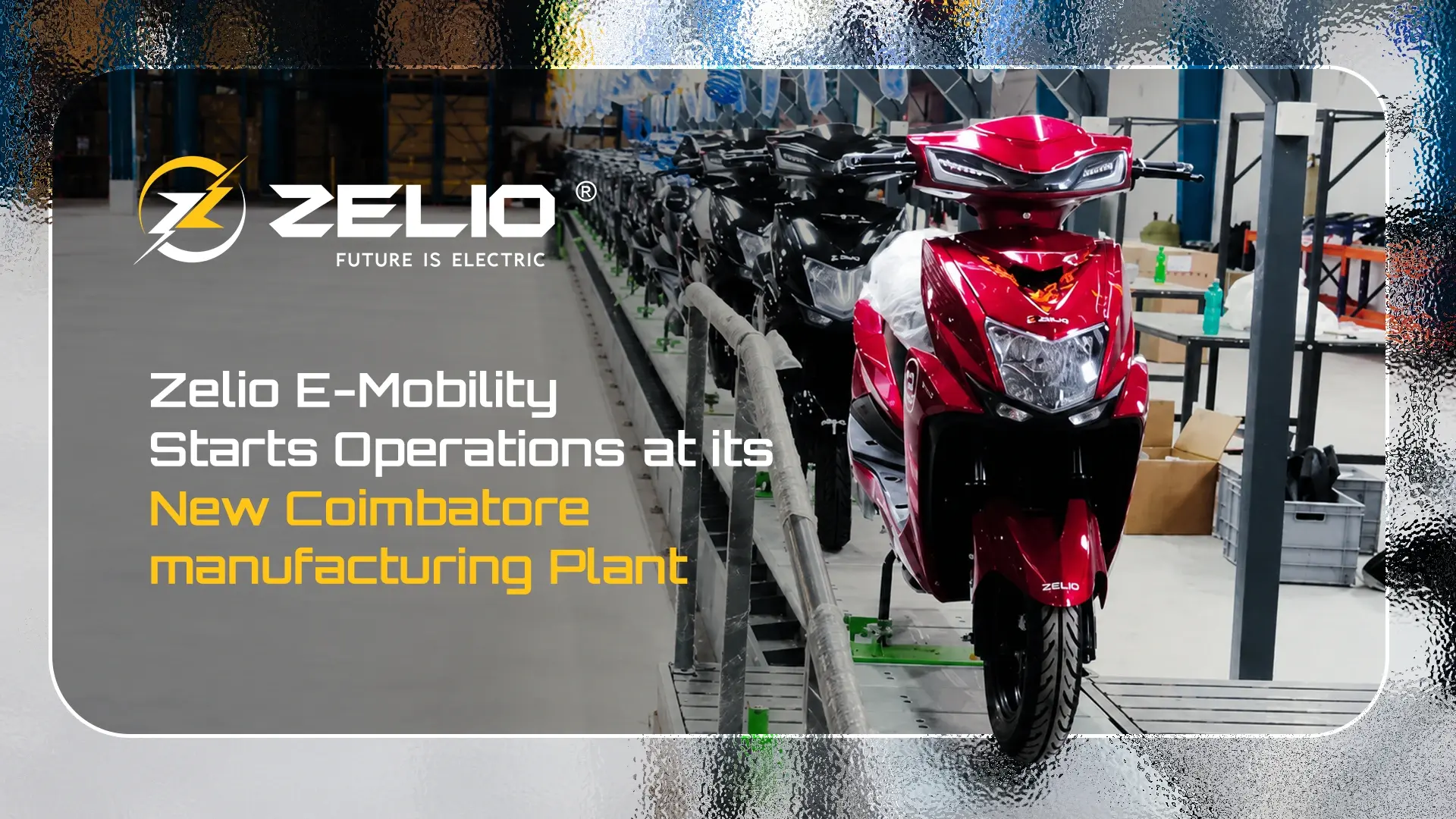
Zelio E-Mobility Starts Operations at Its New Coimbatore Manufacturing Plant
A few months ago we told you Zelio was planning a new plant in Coimbatore. That plan has now become a running facility. Commercial production started this week, and the timing matters just as much as the announcement did back in March. Here is what actually changed, what it means for riders in the South, and why a 39,000 sq ft facility on Trichy Road is a bigger deal than its size suggests. How Quickly This Went From Plan to Reality When Zelio first spoke about Coimbatore, the plan was to begin setting up the facility in April and have it commercially operational by July. That is exactly what happened. The plant is now assembling electric scooters, and it started production the same day it was formally opened. That kind of timeline discipline is worth noting on its own. A lot of manufacturing announcements in India slip by months, sometimes years. Zelio moved from plan to production in roughly three months of setup time, which says something about how the company runs its expansion playbook by this point. This is the fourth facility it has commissioned in a similar window, after Ladwa, Patan, and Cuttack. What the Coimbatore Plant Actually Does The facility is located on Trichy Road and covers close to 39,000 square feet. It handles scooter assembly along with storage, logistics, and the everyday operational work that keeps a regional supply chain moving. It is not a components factory. It takes Zelio's existing scooter lineup and puts it together closer to where people are actually buying. That difference is bigger than it sounds. A plant based in Haryana shipping scooters down to Tamil Nadu, Karnataka, Kerala, Andhra Pradesh, Telangana, and South Maharashtra adds days to delivery and adds cost to every unit that travels that far. Building closer to these six markets cuts out a big chunk of that friction in one move. The plant can produce up to 60,000 units a year at full capacity. Zelio is not pushing it that hard from day one. The initial phase is expected to turn out somewhere between 24,000 and 30,000 units annually, with output scaling up gradually as demand in the region grows. That is a sensible way to ramp a new facility instead of overcommitting early and struggling to hit the number. What This Adds to Zelio's Overall Manufacturing Capacity With Coimbatore now live, Zelio's total installed manufacturing capacity across India stands at 2,40,000 units a year. Before this plant came online, that number was 1,80,000. That is a 33 percent jump in one move. To put the full network in perspective, Zelio now runs four plants. Ladwa in Haryana remains the largest at roughly 2,63,450 square feet. Patan, also in Haryana, adds another 2,52,301 square feet. Cuttack in Odisha, commissioned earlier this year, covers around 30,500 square feet. Coimbatore is the newest addition at close to 39,000 square feet. Four plants across three states is a meaningfully different company than the one that was running a single facility in Hisar a few years ago. It reflects a manufacturing strategy built around getting closer to demand clusters rather than centralising everything and shipping outward. How Many People Will Work at the New Plant The Coimbatore facility currently employs 30 people directly. That number is set to grow past 100 in the coming months, which lines up with Zelio's broader plan to cross 500 employees company-wide by the end of this financial year, up from around 260 today. The roles being filled here are not just factory floor positions. They include plant leadership, production planning, quality control, and the kind of operational staff that keeps a new facility running smoothly as it scales. For Coimbatore specifically, this hiring is happening at the same time the plant is being commissioned for larger-scale output, so the workforce is growing alongside the production ramp rather than after it. Why South India, and Why Now Kunal Arya, Managing Director of Zelio E-Mobility , has been consistent about the reasoning behind this plant since it was first announced. His view is that South India represents a genuine growth corridor for the company, driven by rising demand for electric mobility and strong underlying market potential in the region. He has framed the Coimbatore facility as a strategic move to tighten the supply chain and support the pace at which Zelio's dealer network is expanding in the South. That dealer expansion is real and ongoing. Zelio currently operates through more than 400 dealerships spread across 25-plus states, and the plan for the coming year is to push that past 550, with South India and the North-East as the two regions getting the sharpest focus. A local manufacturing base in Coimbatore is the natural companion to that dealer growth. More outlets without local supply just means longer waits for customers and higher freight costs for the company. Coimbatore closes that gap for six states in one go. Planning to Buy a Zelio Scooter in South India? Here's What You Should Know For a rider in Chennai, Bengaluru, Kochi, Hyderabad, or Coimbatore itself, the practical impact of this plant shows up in two places over the coming months. Delivery timelines to dealerships in these markets should shorten as inventory starts moving from a facility that is days closer rather than a full country away. And as the plant scales toward its 60,000 unit capacity, dealer stock availability across these states should improve, meaning fewer waitlists for popular models. The scooters coming out of Coimbatore are built to the same manufacturing standards and quality protocols as every other Zelio plant. This is not a lower-spec regional line. It is the same product, assembled closer to home for southern buyers. If you want to check current models and pricing, the Zelio dealer locator is the fastest way to find your nearest showroom as the network in the South continues to expand. For the latest on-road prices across Zelio's lineup, see the battery scooty price list . How This Fits Into Zelio's Larger Growth Story Coimbatore is not an isolated move. It follows the Cuttack plant that came online earlier this year, and it lines up with a company that reported revenue of Rs 313.68 crore in FY26, up 81.8 percent over the year before, while staying profitable the entire time. That combination of manufacturing expansion funded by actual business performance, rather than a story built purely on investor capital, is what separates this expansion from a lot of the noise in the wider Indian EV space right now. A new plant commissioned every few months, a workforce doubling in the same year, and a dealer network aiming to cross 550 outlets are not three separate announcements. They are one company scaling in a coordinated way, and Coimbatore going live this month is simply the latest piece of that falling into place. Sources Zelio E-Mobility Opens Coimbatore Plant to Expand in South India - Autocar Professional, 13 July 2026 Zelio E-Mobility Plans Coimbatore Plant to Expand Southern Manufacturing Footprint - Autocar Professional Zelio E-Mobility to Set Up Fourth Manufacturing Facility in Coimbatore to Boost EV Production - EMobility+ Zelio E-Mobility to Double Workforce Beyond 500 Employees as EV Manufacturing Expansion Accelerates Across India - EVTech.News
Electric Scooter Insurance in India - Do You Need It?
If your scooter is a high-speed, RTO-registered model, insurance is not optional. It is mandatory by law to have insurance for that scooter, But If your scooter is a low-speed model under 25 km/h that needs no licence and no registration, insurance is not legally required. But "not required" and "not needed" are two very different things, and that gap is where most buyers get confused. We build both kinds of scooters at Zelio, so we get this question at almost every showroom conversation. The Legal Position - What the Law Actually Says India splits electric two-wheelers into two categories under the Central Motor Vehicles Rules, and your insurance obligation depends entirely on which category your scooter falls into. High-speed electric scooters (motor above 250W or top speed above 25 km/h) are treated exactly like a petrol scooter under the Motor Vehicles Act. Third-party insurance is compulsory. Riding without it is a punishable offence, and traffic police can fine you, impound the vehicle, and in an accident you are personally liable for damages that a valid policy would otherwise have covered. Our low speed vs high speed electric scooter guide breaks down exactly how these two categories are defined and what changes between them. Low-speed electric scooters (250W or less, 25 km/h or less) are classified as non-motorised vehicles. No licence, no RTO registration, no road tax, and no mandatory insurance. Every standard Zelio model falls in this category. Our RTO fees guide for electric two-wheelers covers the full registration picture if you want to understand why this exemption exists in the first place. That is the legal answer. Now here is the part that actually matters for your decision. Which Zelio Models Need Insurance and Which Don't Since this is the question we get asked most directly, here is the straight breakdown by model. No insurance legally required (low-speed, exempt category): Eeva , Eeva Eco , Eeva Eco LX , Eeva Eco ZX , Eeva ZX , Eeva ZX+ , Little Gracy , Gracy , Gracy i , Gracy+ , Gracy Pro , Legender , Legender+ , Legender+ Premium , Logix , Loader , X-Men+ and X-Men 2.0 are all built to run at or under 25 km/h with a motor of 250W or less. Every one of these qualifies as a non-motorised vehicle under CMVR, which means no licence, no RTO registration, no road tax, and no mandatory insurance. This covers the entire standard Zelio lineup. Insurance legally mandatory (high-speed, registered category): Mystery is Zelio's only high-speed model. Its motor and top speed cross the CMVR exemption limits, which means it is classified as a motor vehicle under the Motor Vehicles Act. If you ride a Mystery, you must have a valid driving licence, RTO registration and at minimum third-party insurance before taking it on public roads. Skipping insurance on this model is not a grey area. It is a legal requirement, same as any petrol scooter. For the latest on-road prices across Zelio's lineup, see the battery scooty price list . Why "Not Mandatory" Does Not Mean "Skip It Without Thinking" This is where most articles on this topic stop short. They tell you insurance is optional for low-speed scooters and move on. We think that leaves out the one detail that should actually shape your decision. If you are riding a low-speed scooter with no insurance and you accidentally hit a parked car, damage someone's shop shutter, or injure a pedestrian, the fact that your scooter is legally exempt from insurance does not make you exempt from paying for the damage. You are personally liable. There is no insurer standing behind you. If the claim runs into lakhs, and vehicle damage or medical claims genuinely can, you are paying that out of your own pocket, not an insurance company's. This is not a scare tactic. It is simply how liability works. The exemption removes a legal requirement to hold a policy. It does not remove your responsibility if something goes wrong on the road. For a scooter that mostly does 15-20 km/h through a colony or a market lane, the odds of a serious incident are genuinely low. But low odds are not zero odds, and the one time it matters is exactly the time you wish you had covered it for a few hundred rupees a year. Warranty Is Not Insurance - A Confusion Worth Clearing Up We hear this mix-up often enough that it deserves its own section. A 2-year warranty on your scooter's motor, controller, and frame protects you against manufacturing defects. If a part fails because of how it was built, the warranty covers the repair or replacement. It does not cover theft. It does not cover accident damage. It does not cover fire, flood, or a scooter stolen from outside your building. Warranty and insurance solve two completely different problems, and treating your warranty card as if it is also your insurance policy is a mistake that only becomes obvious the day something actually happens. If your scooter is stolen tomorrow, your warranty is worthless in that situation. Only insurance, or the money in your own pocket, replaces it. What Voluntary Insurance Actually Costs for a Low-Speed Scooter For a scooter priced between Rs 50,000 and Rs 80,000, a standalone fire and theft policy typically costs somewhere between Rs 600 and Rs 1,200 a year, depending on the insurer and your city. A more complete comprehensive-style policy covering accidental damage as well usually falls between Rs 1,200 and Rs 2,500 annually, again depending on your scooter's value and where you live. Put that against the price of the scooter itself. On a Rs 58,159 Zelio Gracy i, a full year of comprehensive-style protection costs roughly what you would spend on two tanks of petrol for a comparable commute. It is a genuinely small number next to what it protects. Insurers do not currently offer these policies specifically branded for "low-speed EVs" in every market, since the category is newer and the policy language is still catching up. In practice, most riders get this cover through a general asset or personal accident add-on, or through a standalone two-wheeler policy that some insurers extend even to non-registered low-speed vehicles on request. It is worth calling two or three general insurers directly and asking, because coverage availability does vary. What Happens If Your Scooter Is Stolen and You Have No Insurance This is the scenario every rider without insurance eventually has to face, and it plays out simply. The scooter is gone. There is no registration certificate to file against, since low-speed scooters are not registered. You can file a police complaint using your purchase invoice and the chassis or motor number, which helps if the scooter is later recovered, but there is no payout coming. The replacement cost comes entirely from you. If you had a fire and theft policy in place, this is exactly the situation it was built for. You file a claim with your invoice, the FIR copy, and any other documents the insurer asks for, and you get compensated based on the scooter's current insured value. High-Speed Electric Scooter Insurance - What It Actually Involves If you are riding one of Zelio's high-speed models, insurance is not a choice, so the more useful question is what it costs and what to look for. Third-party insurance is the legal minimum and covers damage or injury you cause to someone else, not damage to your own scooter. For most electric scooters in the mid-price range, third-party premiums typically run a few hundred rupees to around a thousand rupees a year, set by IRDAI-mandated slabs rather than by individual insurers. Comprehensive insurance adds coverage for your own scooter against accident damage, theft, and fire, on top of the mandatory third-party portion. This costs more, usually a percentage of your scooter's insured value, but it is the difference between paying for your own repair bill and having it covered. Whichever level you choose, always carry your registration certificate, your driving licence, and your valid insurance policy while riding a high-speed scooter. All three get checked during routine stops, and missing any one of them results in a fine. Who Should Seriously Consider Voluntary Insurance Not every low-speed scooter owner needs to rush out and buy a policy, but a few situations make it a genuinely smart call rather than an optional extra. You park on the street rather than inside a gated society. Theft risk goes up meaningfully when the scooter sits outside overnight without any building security. You ride in dense city traffic daily. More traffic exposure means more chances of a minor collision, even at 25 km/h. Your scooter is on the higher end of the price range. A Rs 75,000+ lithium model losing to theft or fire is a bigger financial hit than a Rs 45,000 entry model, and the insurance cost difference between the two is small in comparison. You are the sole earner relying on the scooter for daily commute or delivery work. Losing the scooter without a replacement plan directly hits your income, not just your convenience. If none of these apply and your scooter stays inside a secure compound with light daily use, the case for voluntary insurance is weaker, though never zero. A Quick Way to Decide Ask yourself three questions. Where does the scooter sleep at night? How much would replacing it cost you today, in cash, with no notice? And how would you feel if it never came back? If the answers make you uneasy, a few hundred rupees a year for peace of mind is not a hard decision. For daily commuters using a Zelio scooter to save on fuel every month, as covered in our best electric scooter for daily commute guide , protecting that saving with a small annual premium is a sensible extension of the same financial thinking that led to buying an electric scooter in the first place.