ZELIO BLOG
Latest news, tips, and insights from the electric mobility revolution.
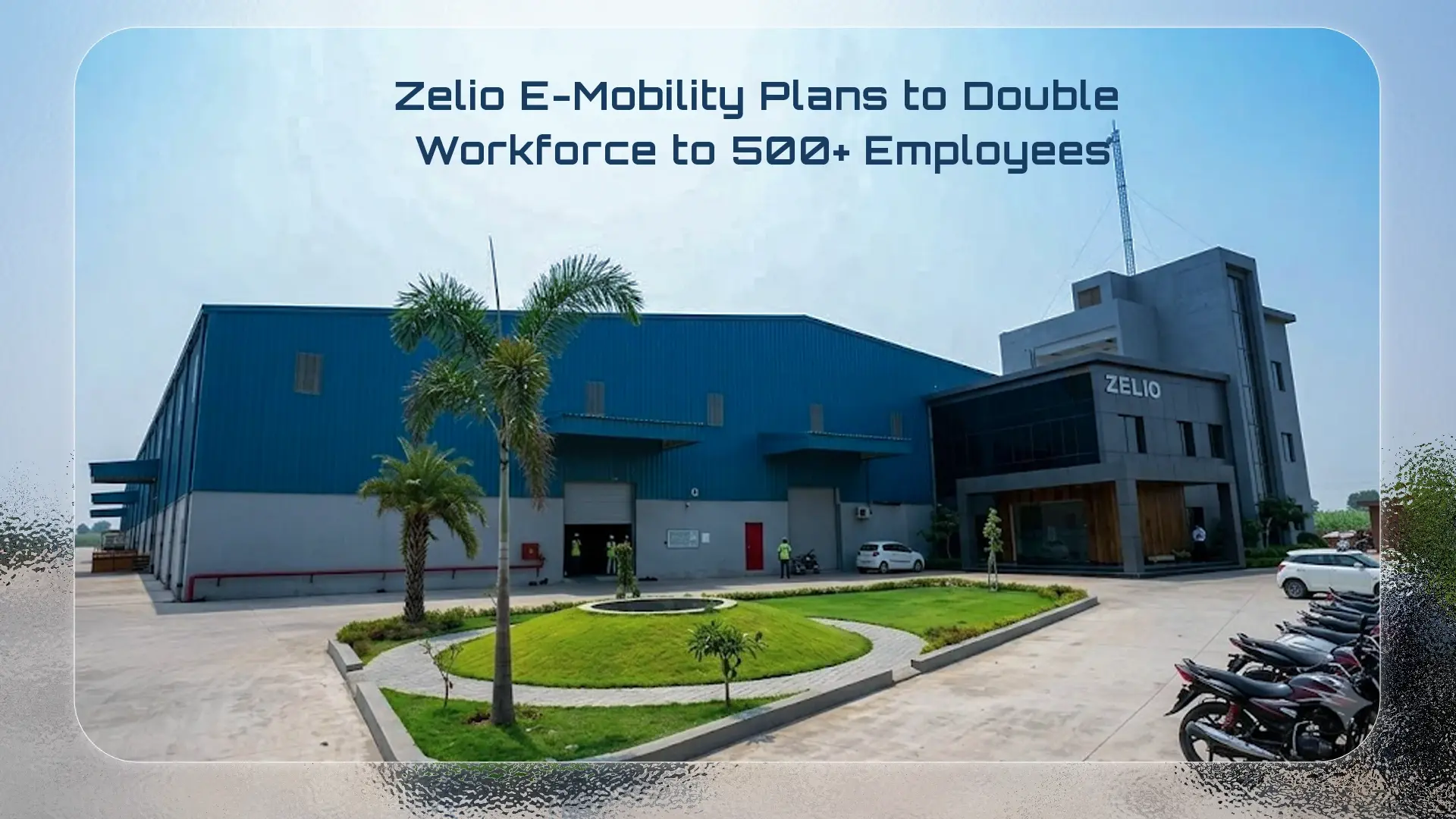
Zelio E-Mobility Plans to Double Its Workforce in FY27
Zelio E-Mobility, the Hisar-based electric two and three-wheeler manufacturer, has announced it will more than double its workforce during the current financial year. The company currently has around 260 employees spread across its manufacturing facilities in Hisar, Bhubaneswar, and Coimbatore. The plan is to take that number past 500 before the end of FY27. This is not a speculative growth target. It is a response to actual business performance. Zelio reported revenue of Rs 313.68 crore in FY26, an 81.8 percent increase over the Rs 172.19 crore it posted the year before. The company has been profitable since inception and has recorded a revenue CAGR of approximately 121 percent over the last four years. The hiring push is the company catching up to where the business already is. Where the New Hires Are Going The expansion is spread across three locations, each with a specific purpose. Hisar - Zelio's headquarters and primary manufacturing base in Haryana. The bulk of the hiring here will focus on production, quality control, and core manufacturing operations. Bhubaneswar - Zelio's facility in Odisha supporting the East India and North-East expansion push. Coimbatore - The newest facility in the lineup. Coimbatore is still being commissioned and ramped up, which makes it the most significant of the three locations in terms of what the hiring signals. A hundred new employees at a facility that is just scaling up means Zelio is serious about South India as a growth market. The roles being filled span manufacturing, R&D, quality, production planning, zonal sales leadership, and after-sales service. These are not temporary or support hires. They are the people who run plants, lead sales territories, and keep the service network functional as dealerships grow. What Our CEO Said Divyanshu Agarwal, CEO of Zelio E-Mobility, explained the thinking behind how the company approaches expansion: "Our expansion is not only focused on manufacturing growth but also on building strong local ecosystems in each region we operate in, ensuring long-term value creation through employment and skill development." That framing matters. Zelio is not building factories and shipping in management from headquarters. The plan is to hire locally in Bhubaneswar and Coimbatore, creating jobs and skills in those markets specifically. For a company entering new geographies, that approach tends to build stickier relationships with local governments, dealers, and customers than a centralized model does. Divyanshu also made the point that this has been consistent with how Zelio has operated since its founding: "Since the beginning, Zelio has always been a people-first company. Wherever we enter, whether a state or a city, our focus is to create meaningful job opportunities and contribute to local employment." The Business Context Behind the Hiring Zelio listed on the BSE SME platform in October 2025. The IPO raised Rs 78.34 crore, including a fresh issue of Rs 58.84 crore and an offer for sale of Rs 15.50 crore. The IPO was subscribed 1.5 times overall. Since listing, the company has continued to perform. The FY26 revenue of Rs 313.68 crore represents the strongest year the company has had, and it came after years of consistent profitability that set Zelio apart from several larger EV peers that are still reporting losses. The dealership network currently stands at 400+ outlets across 25+ states. The target for FY27 is 550+ dealerships, with a specific focus on South India and the North-East. The Coimbatore hiring directly supports the South India push, and the Bhubaneswar hires support the East and North-East strategy. For a company to expand its dealer network to 550 locations and maintain after-sales quality across that footprint, it needs the backend workforce to match. That is the practical reason behind the 500+ headcount target. Why This Matters Beyond Zelio Zelio's expansion follows a pattern that tells you something about where the Indian EV market is heading, particularly in the slow-speed electric scooter segment. The brands seeing the fastest growth in this segment are not the ones with the biggest advertising spends. They are the ones building manufacturing depth, dealer width, and service reliability simultaneously. A dealer in a tier-2 city who cannot get spare parts within 48 hours or reach a service professional by phone becomes a liability, not an asset. Zelio's hiring of after-sales professionals and zonal sales leaders alongside plant staff reflects an understanding of this. The 121 percent revenue CAGR over four years, combined with consistent profitability, also tells a different story than the wider EV narrative in India, where many companies are still in investment mode and reporting operating losses. Zelio has been growing while keeping the business in the black, which gives the current expansion a more stable foundation than if it were funded purely by external capital. With 2 lakh+ riders already on Zelio scooters across India and a lineup of 19 models starting at Rs 47,784, the workforce expansion is ultimately about making sure the company can serve what it has already sold, and confidently sell more. For the latest on-road prices across Zelio's lineup, see the battery scooty price list . What Roles Zelio Is Hiring For Based on the official announcement, the hiring covers: - Plant heads and production planning specialists - R&D and quality control professionals - Zonal sales managers and regional sales leaders - After-sales service and customer support professionals - Manufacturing floor staff at Hisar and Coimbatore If you are looking to be part of Zelio's expansion, The Zelio E-Mobility careers is the right place to start. Sources Zelio E-Mobility to Double Workforce as EV Expansion Gains Pace Across India - EMobility+, 2026 Zelio set to cross 500 employees in FY27 - HR Katha, 2026 Zelio E-Mobility to Double Workforce to Over 500 Employees - Manufacturing Today India Zelio E-Mobility Plans to Double Workforce Following Strong Revenue Growth - Economic Times Auto, 2026 Zelio E-Mobility to Double Workforce, Expand Employee Strength Beyond 500 - GearFliq
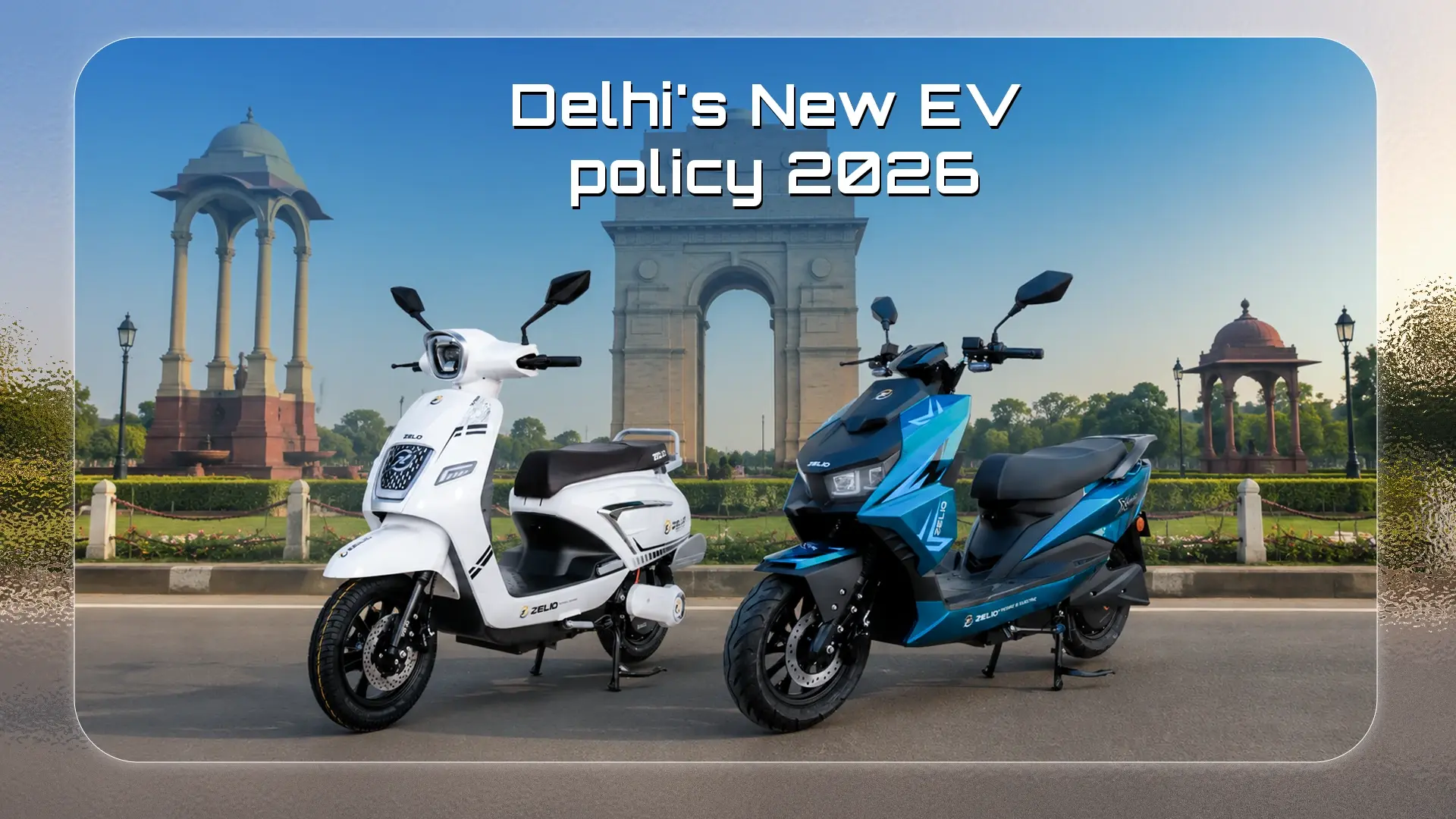
Delhi’s New EV Policy 2026 - What It Means for Electric Scooter Buyers in Delhi
Delhi has approved its new Electric Vehicle Policy and it came into effect on July 1, 2026. For anyone who has been sitting on the fence about buying an electric scooter in Delhi, this policy changes the financial calculation significantly. Here is what the policy actually says, what it means for two-wheeler buyers specifically, and what people from inside the EV industry are saying about it. What the Delhi's New EV Policy 2026 Actually Covers The Delhi EV Policy 2026 is built around three pillars: consumer incentives to bring down the cost of buying an EV, infrastructure investment to make charging accessible across the city, and a phased timeline to move Delhi away from petrol and diesel vehicles over the coming years. 100% road tax and registration fee exemption - For electric cars priced up to Rs 30 lakh. This removes one of the most significant upfront costs for EV buyers in this segment. Subsidies for electric two-wheeler buyers - The policy introduces purchase incentives for electric two-wheelers, with subsidies of up to Rs 30,000 for buyers in the first year of the policy. For a Delhi rider looking at an electric scooter, this directly reduces the on-road cost. Expansion of EV charging infrastructure - The policy commits to a significant push on public charging points across the city, addressing the range anxiety and charging accessibility concerns that have held back EV adoption in Delhi's denser residential areas. Phased ICE phase-out timeline - The policy outlines a phased transition towards EV-only registrations in selected vehicle categories over the coming years, giving the industry and buyers a clear signal about the direction Delhi is heading. What the Chief Minister said, Delhi CM Rekha Gupta has pitched the policy as a savings measure first, an environmental one second. Her framing: buyers want to know if going electric actually saves money, and the mix of purchase subsidies, scrapping incentives, and lifetime road tax exemption is meant to make that answer an easy yes. Private car buyers don't get a purchase subsidy under the policy, but scrapping an old petrol or diesel car for an EV still qualifies for up to ₹1 lakh in scrapping benefits plus the tax waivers. On charging, she treats the rollout as a trust issue, not a checklist item. "Charging infrastructure is not merely about installing chargers," she said, framing the planned expansion to 32,000 points as the thing that actually gets people to switch. She's also been clear the transition won't happen overnight. Existing petrol and diesel vehicles keep running as long as they're legally on the road. The shift to electric-only registrations comes in phases, through 2027 and 2028. What This Means if You Are Buying an Electric Scooter in Delhi For a Delhi rider considering an electric scooter, the 2026 policy stacks multiple savings together in year one. The up to Rs 30,000 subsidy on two-wheelers, combined with the existing 100% road tax and registration exemption for low-speed electric scooters that was already in place before this policy, means the real out-of-pocket cost of switching to electric has dropped again. A Zelio Gracy i starting at Rs 58,159 in Delhi, with the two-wheeler subsidy applied, could effectively come down to around Rs 28,000-30,000 lower than its listed price for eligible buyers. Combined with the Rs 30,000-40,000 annual savings on fuel and servicing that any electric scooter already delivers at Rs 0.25 per km, the financial case for switching has never been stronger for Delhi commuters. The charging infrastructure push also directly addresses one of the real daily concerns for riders who live in apartments or shared housing where home charging is not always possible. The EV industry welcomed the policy with clear and specific reactions, not just generic approval. Kunal Arya, Co-founder and Managing Director of Zelio E Mobility, responded directly to the announcement: "Delhi's EV Policy 2026 is a decisive step toward making electric mobility mainstream, accessible, and infrastructure-backed. The combination of demand incentives including subsidies of up to Rs 30,000 for two-wheeler buyers in the first year along with a clear ICE phase-out timeline and a strong push for charging infrastructure, creates a practical ecosystem for accelerated EV adoption. What stands out is the policy's balanced approach: driving consumer demand while addressing the charging accessibility barrier head-on. For the EV industry, this sends a clear signal that policy is moving beyond intent to execution." Kunal also pointed to the particular impact the policy will have on two-wheeler and last-mile mobility adoption: "At Zelio E-Mobility, we believe such progressive frameworks will significantly accelerate EV penetration, especially in the two-wheeler and intra-city last-mile mobility segments, where adoption delivers immediate environmental and economic impact. Delhi is setting a benchmark that other urban centres will closely watch." Why Two-Wheelers Are at the Centre of This Delhi's vehicle population is dominated by two-wheelers. They account for the largest share of registered vehicles in the city and contribute significantly to both traffic congestion and air pollution. Any EV policy that moves the needle on two-wheeler electrification moves the needle on Delhi's air quality. The 2026 policy's explicit focus on two-wheeler subsidies and the eventual ICE phase-out timeline for this category signals that Delhi is not just thinking about EV cars for the affluent buyer. It is targeting the rider who currently uses a petrol scooter for daily commuting, because that is where the volume is and where the environmental impact is greatest. For that rider, the combination of the Rs 30,000 subsidy, zero road tax, zero registration fee, and Rs 0.25 per km running cost makes switching to an electric scooter in Delhi a decision that is financially hard to argue against in 2026. How Zelio Electric Scooters Fit Into This Zelio's lineup spans low-speed and high-speed electric scooters across several price points in Delhi. The low-speed models already qualify for no-licence, no-registration treatment under existing motor vehicle rules, and that now stacks with the new policy's subsidies for eligible buyers. For the full list of current models and prices, see the Delhi electric scooter price list . If you're curious how those prices compare once you factor in road tax exemptions, PM E-DRIVE subsidies, and the other line items that make up an on-road cost, the battery scooty price list breaks all of that down across budget, mid-range, and premium models. If you want to see the five-year cost breakdown against a petrol scooter, the electric vs petrol scooter comparison lays it out. And if you're trying to match a model to your commute and budget, the best electric scooters under ₹70,000 guide is a good starting point. The Bigger Picture Kunal Arya's observation that "Delhi is setting a benchmark that other urban centres will closely watch" reflects something worth noting. Delhi is not the first Indian city to offer EV subsidies, but the combination of the subsidy quantum, the charging infrastructure commitment, and the phased ICE transition timeline in a single cohesive policy is more structured than what most other cities have managed. If this policy drives meaningful two-wheeler electrification in Delhi over the next two to three years, the template will almost certainly be picked up by other state capitals. For EV brands operating in India, that trajectory matters more than any single subsidy figure. For individual buyers in Delhi in 2026, the question is simpler: has the policy made buying an electric scooter the better financial decision today? The answer, for most daily commuters doing 30-50 km a day, is yes. Sources Industry welcomes Delhi EV policy, sees strong push for electric vehicle adoption - BioEnergy Times, June 30, 2026 Delhi approves EV Policy 2026 with scrappage boost and tax waivers - SME Futures, 2026 Auto industry and experts welcome Delhi EV Policy 2026 - Jagran, 2026 Industry leaders hail Delhi's new EV policy as a blueprint for clean mobility - Navbharat Times, 2026 Delhi aiming for 32,000 public EV charging points by 2030: CM Rekha Gupta - The Tribune, 2026 Delhi EV Policy 2026 designed to save buyer's money: CM Rekha Gupta - DD News, 2026
Electric Scooter Price in Uttar Pradesh: Latest Price List 2026
Electric Scooter Price in Kerala 2026: Latest Prices and Models
Low Speed vs High Speed Electric Scooter in India 2026 - Which One Is Right for You?
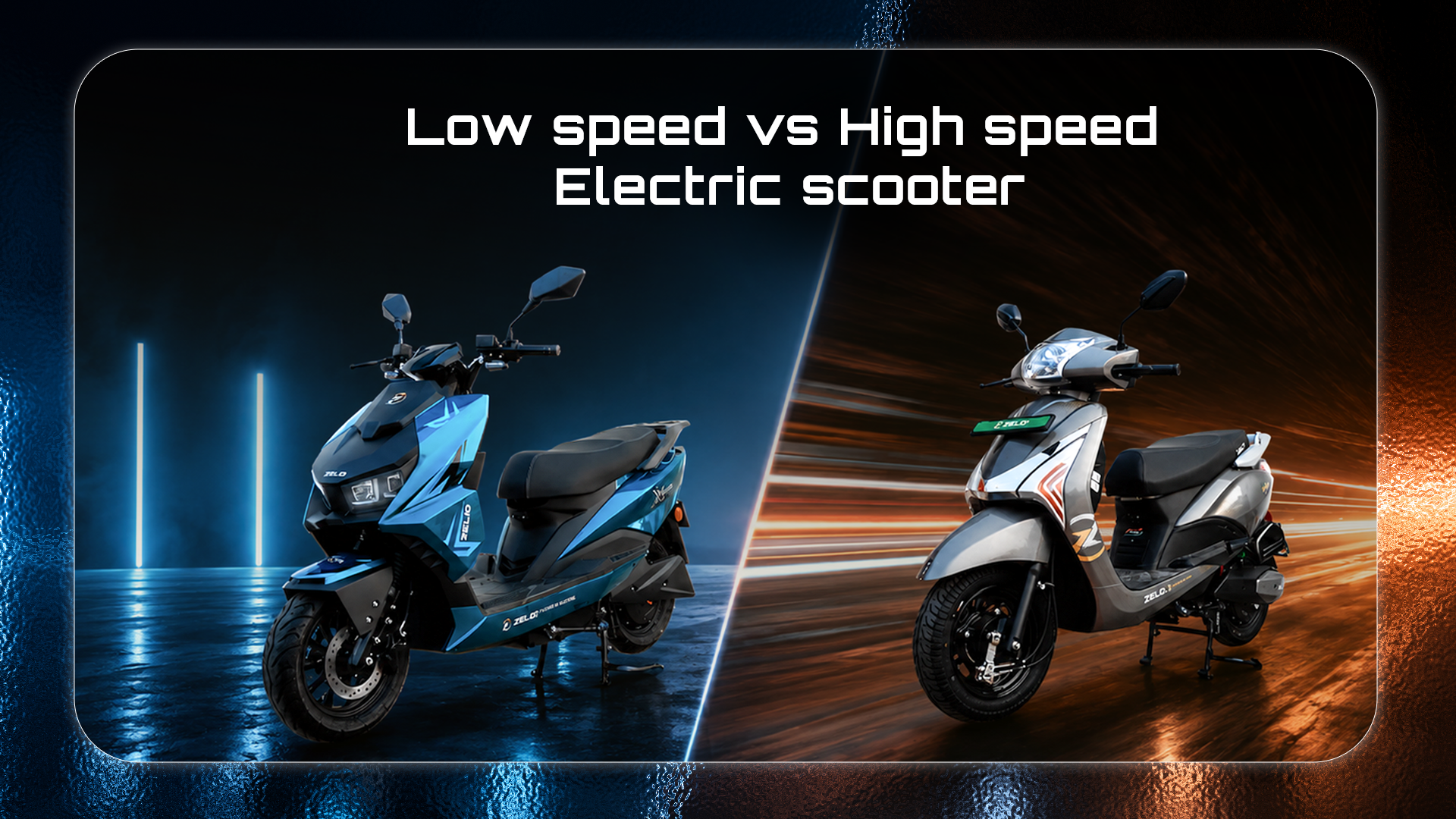
Before you buy any electric scooter in India, one question decides almost everything else - low speed or high speed. Get it right and you save money, skip paperwork, and pick a scooter that actually suits your daily route. Get it wrong and you either end up with a scooter that cannot keep up with traffic, or one that costs Rs 10,000-15,000 more than the sticker price once RTO, road tax, and insurance are added. The difference between the two is not just about speed. It is about two completely different legal categories with different ownership costs, different paperwork, and different riding realities. At Zelio, we make 18 low-speed electric scooters and one high-speed model - the Mystery. We know both categories well. Here is the honest breakdown. The Legal Difference - This Is Where It All Starts Under India's Central Motor Vehicles Rules (CMVR), an electric scooter is classified as a low-speed vehicle only if it meets both of the following conditions: Motor power: 250W or less (measured at 30 minutes continuous output) Top speed: 25 km/h or less Both conditions must be met. A scooter that runs at 25 km/h but has a 350W motor is not a low-speed vehicle under CMVR. It is a motor vehicle, and it requires registration and a licence. This is what catches some buyers off guard when a scooter marketed as "no licence" turns out to have a higher-wattage motor that disqualifies it from the exemption. A high-speed electric scooter is any scooter with a motor above 250W or a top speed above 25 km/h. Under Indian law, this is treated the same as a petrol scooter in every respect. What Each Category Means in Practice Factor Low Speed Electric Scooter High Speed Electric Scooter Motor power 250W or less Above 250W Top speed Up to 25 km/h 40-80+ km/h Driving licence Not required Required RTO registration Not required Required Road tax Not applicable Applicable Insurance Not mandatory (voluntary available) Mandatory Number plate Not issued Issued by RTO Minimum age 16 years 18 years (with licence) Government subsidy (PM E-DRIVE) Generally not eligible Eligible (lithium, certified) Running cost per km Rs 0.25 Rs 0.25-0.50 (varies by model) For the latest on-road prices across Zelio's lineup, see the battery scooty price list . The Total Cost Difference - Not Just the Purchase Price Most comparisons stop at comparing sticker prices. The real cost difference is much wider than that. Buying a high-speed electric scooter in India involves: Purchase price RTO registration fee (Rs 1,500-2,500 depending on state) Road tax (1-9% of vehicle cost depending on state) Mandatory third-party insurance (Rs 500-1,500 per year) Driving licence (if you do not already have one - Rs 400-600 plus time) Number plate and documentation For a scooter costing Rs 1,00,000, total on-road cost in Haryana after adding registration, road tax, and insurance typically crosses Rs 1,08,000-1,12,000 in the first year. Buying a low-speed Zelio electric scooter involves: Purchase price only No registration fee No road tax No mandatory insurance No licence required (from age 16) A Zelio Gracy i at Rs 58,159 costs exactly Rs 58,159 to ride home. No additional paperwork, no queue at the RTO, no hidden first-year costs. Over five years, a low-speed Zelio scooter saves a commuter doing 35 km daily approximately Rs 1,80,000-2,50,000 compared to a high-speed petrol scooter - including fuel, servicing, registration, road tax, and insurance. That figure comes from Zelio's own cost modelling based on 2 lakh+ rider data across India. What Low Speed Actually Feels Like on Indian Roads 25 km/h is slower than highway traffic. It is slower than arterial road traffic. But it is completely in sync with how most Indian residential areas, colony roads, market lanes, and school routes actually flow through the day. On a typical morning school drop, a market run, a coaching centre commute, or a hyperlocal delivery route, a 25 km/h scooter is often not the slowest vehicle on the road. Auto-rickshaws, e-rickshaws, cycling delivery workers, and school buses in congested zones frequently move at or below this speed. Where a low-speed scooter genuinely struggles is on main arterial roads where traffic moves at 35-50 km/h, or on flyovers with steep inclines where the 250W motor works hard. In these conditions, the rider becomes the slowest vehicle and the experience is frustrating, not just slow. The honest rule: if your daily route stays within residential and colony roads with moderate traffic, a low-speed scooter handles it well. If your route involves a sustained stretch on a main road or an expressway, a high-speed scooter is the right choice for safety and confidence. Performance on Inclines and with a Pillion A 250W motor at 25 km/h is tuned for flat roads with a single rider. On a steep flyover or an inclined road, the motor slows down noticeably under the combined weight of two people. The speed drops, the motor heats up faster, and the riding experience feels strained. High-speed scooters with 1-4 kW motors handle inclines, pillion loads, and highway speeds without any of this strain. The motor has more headroom and the riding experience on varied terrain is significantly more confident. This is important for riders who regularly carry a pillion on a mixed route. Zelio's Gracy+ and X-Men 2.0 handle pillion loads better than lighter low-speed models, but even these operate within the 250W cap on their low-speed variants. Zelio's Low Speed Lineup vs the Zelio Mystery Zelio makes 18 Made-in-India electric scooters. Eighteen of them are low-speed models. One is high-speed. Zelio's low-speed range includes the Gracy i , Gracy+ , Gracy Pro , Little Gracy , Legender+ , Legender+ Premium , Eeva , Eeva ZX+ , X-Men+ , X-Men 2.0 , Logix , Loader and more . These start at Rs 44,334 and go up to Rs 75,384. No licence required, no RTO registration, no road tax. All are Made in India and carry a 2-year warranty on motor, controller, and frame. The full low-speed lineup is at available at zelioebikes . The Zelio Mystery is the only high-speed scooter in our lineup. 72V motor, up to 100 km range, built for riders who need to keep pace with main road traffic. It requires a valid driving licence and RTO registration. It is the right choice if your daily route involves arterial roads, flyovers, or distances where 25 km/h is simply not enough. Full details at zelioebikes.com/mystery/ . Who Should Choose Low Speed A college student doing 15-30 km daily - Colony roads, moderate traffic, no licence yet, budget under Rs 60,000. A Zelio Eeva or Gracy i covers this completely without any paperwork. A homemaker doing school runs and local errands within 10-20 km - Tight lanes, market parking, no interest in RTO queues. The Zelio Little Gracy was built specifically for this rider. A delivery rider covering hyperlocal city routes - 40-60 km daily within residential and market zones. The Zelio Logix or Loader handles this at Rs 0.25 per km with no licence or registration costs. A senior citizen doing short local rides - Lower speed means lower risk. No paperwork, no RTO, easy to manage. The Zelio Little Gracy is consistently the first recommendation here. Who Should Choose High Speed A daily office commuter on arterial roads doing 30-60 km - If your commute route has a sustained main road stretch at 35-50 km/h, riding a 25 km/h scooter in that traffic is not safe or practical. The Zelio Mystery at Rs 85,159 (lithium) is the honest answer, with a driving licence required. A rider who needs to travel across different zones in a city - Moving between residential areas, main roads, and flyovers in a single trip means needing a speed range that a low-speed motor cannot comfortably provide. A rider who wants access to highway and intercity stretches - A low-speed scooter is not designed for highways. A high-speed, RTO-registered scooter gives full access to all public roads without restriction. The Insurance Question For low-speed electric scooters , third-party insurance is not legally mandatory in India since they are not classified as motor vehicles under CMVR. You can buy voluntary insurance if you want, and it is available from most general insurers. The premium is lower than for registered vehicles because the risk profile is lower at 25 km/h. For high-speed electric scooters , third-party insurance is mandatory under the Motor Vehicles Act. Riding without valid insurance is a punishable offence. Quick Decision Choose a low-speed Zelio electric scooter if: Your daily route is within residential areas, markets, and colony roads Your commute is under 40 km and does not involve sustained main road riding You want no licence, no registration, and no road tax Your budget is under Rs 80,000 and you want the lowest total cost of ownership You are 16 or older and buying your first scooter Choose the Zelio Mystery (high speed) if: Your commute involves arterial roads, flyovers, or speeds above 30 km/h You have a valid driving licence and are comfortable with RTO registration Your daily distance is 40-80 km with mixed road types You want Zelio's Made-in-India quality with full road access and a high-speed motor About Zelio E Bikes Zelio E Bikes is a Made-in-India electric two-wheeler brand. We design, build, and sell electric scooters built specifically for Indian roads, Indian weather and the Indian daily commute. Every Zelio scooter carries a 2-year warranty on motor, controller, and frame, and a 3-year warranty on lithium batteries. We back that warranty with 350+ authorised service centres across India. Zelio has 2.5 lakh+ happy riders across India. We are a publicly listed company with over Rs 300 crore in annual turnover. When we say we will be around to service your scooter in year three, we mean it. Explore our full range | Find a dealer near you
Best Electric Scooter for Delivery Riders in India 2026 - Real Costs, Real Picks
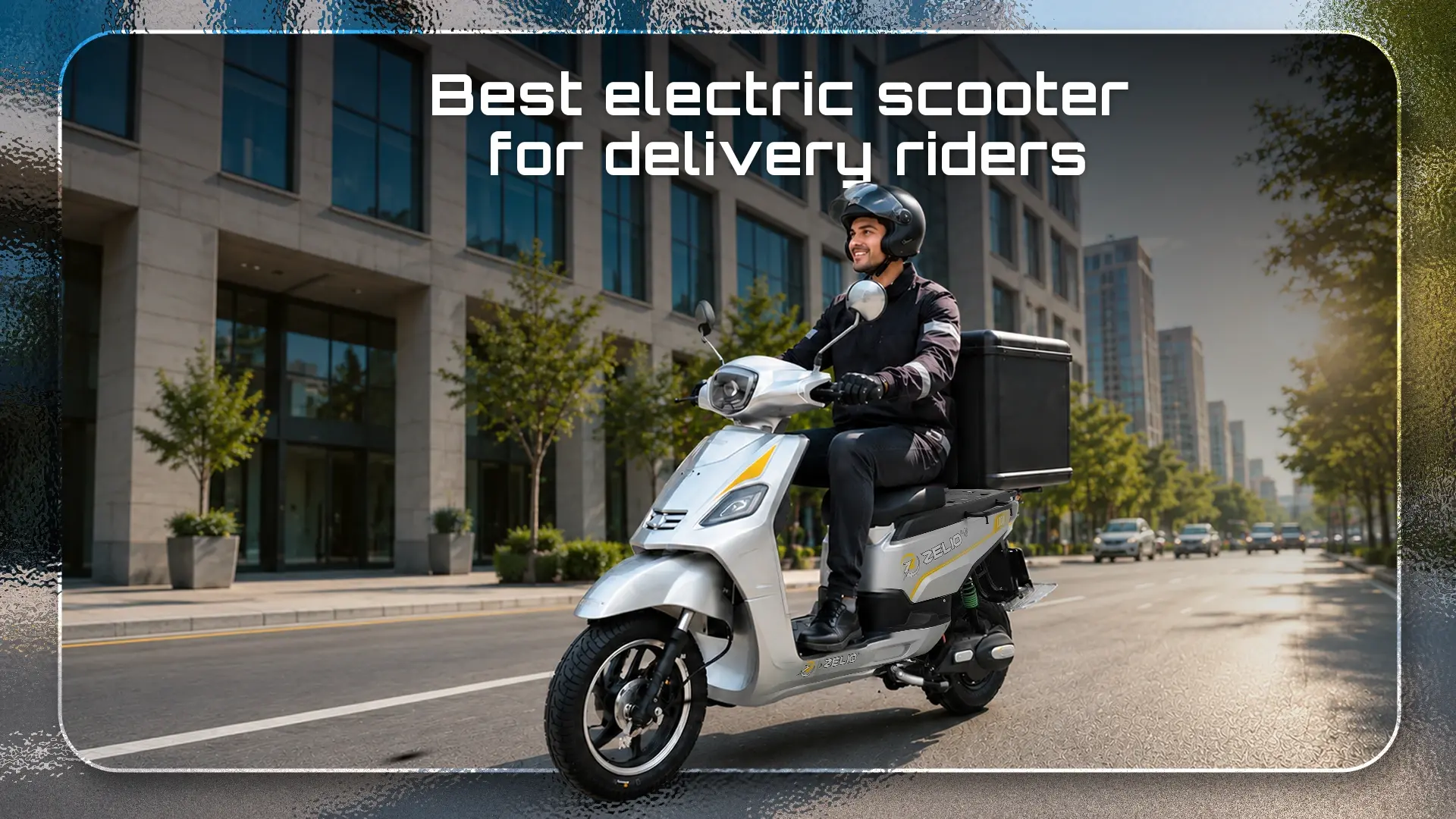
A delivery rider in India covers 40 to 100 km every single day. At petrol prices hovering around Rs 100-105 per litre, that is Rs 200-500 daily going straight to the pump. Rs 6,000-15,000 every month. Rs 72,000-1,80,000 every year. Switching to an electric scooter cuts that by 90%. At Rs 0.25 per km, a rider covering 60 km daily spends Rs 15 on electricity instead of Rs 150 on petrol. The scooter pays for itself in just over a year from fuel savings alone. Most blogs on this topic recommend Rs 90,000-1.5 lakh high-speed scooters that need a driving licence, RTO registration, and road tax. That is not the reality for most delivery riders in India who own their scooter, want to keep costs low, and need something that runs reliably through a 50-80 km daily shift. At Zelio, we have been building electric scooters in India since 2021. We are one of the electric scooter brands in India that tests every battery for Indian roads, Indian loads and Indian weather. We have 2 lakh+ riders using our scooters daily and 360+ authorised dealers across 25+ states. What a Delivery Rider Actually Needs Most comparisons evaluate scooters for personal commuters. A delivery rider is a different kind of user entirely. Uptime is income - When your scooter is at a service centre, you are not earning. Every breakdown costs a delivery rider more than just the repair bill - it costs the day's income too. A scooter with a nearby authorised service centre matters more than a scooter with an impressive spec sheet. Running cost per km, not just purchase price - A Rs 50,000 scooter at Rs 2.50 per km costs more over two years than a Rs 65,000 scooter at Rs 0.25 per km. The maths always favours electric for anyone doing 40+ km daily. Our MD Kunal Arya puts it simply: fuel savings alone recover the cost of the scooter within two years for most delivery riders. Load capacity and build - A delivery scooter carries food boxes, grocery bags, medicine parcels, and sometimes a second person through every kind of Indian road. Our scooters are designed specifically for Indian road conditions - not adapted from European or Chinese market models that were never built with Pune potholes or Delhi December mornings in mind. Licence requirements - Not every delivery rider has a current two-wheeler licence. All low-speed Zelio scooters under 25 km/h need no driving licence and no RTO registration under Indian motor vehicle rules. You can buy, register nothing, and start earning the same day. The non-RTO scooter guide explains exactly what this means legally. The Monthly Numbers That Matter A delivery rider doing 60 km daily is among the highest-mileage riders in India. Here is what that route costs every month: Petrol Scooter Zelio Electric Scooter Cost per km Rs 2.50 Rs 0.25 Daily cost (60 km) Rs 150 Rs 15 Monthly fuel cost Rs 4,500 Rs 450 Annual fuel cost Rs 54,000 Rs 5,400 Annual servicing Rs 6,000-8,000 Rs 1,500-2,000 Total annual running cost Rs 60,000-62,000 Rs 6,900-7,400 Annual saving: Rs 52,000-55,000. That saving does not account for road tax, registration fees, or insurance that petrol scooter riders pay and low-speed Zelio riders do not. For a delivery rider currently spending Rs 4,500-5,000 a month on petrol, this is the most impactful financial switch they can make. Best Zelio Electric Scooters for Delivery Riders in India 2026 1. Zelio Loader - Best Heavy-Duty Electric Scooter for Commercial Delivery Price: Rs 66,184 | Range: 60-90 km | Motor: BLDC | Licence: No The Loader is Zelio's purpose-built commercial delivery scooter. We designed it from the ground up for riders who carry heavy loads daily - not a personal commuter with a larger rear rack added on. Reinforced frame, higher load capacity, built for the kind of weight and daily punishment that wears out lighter scooters in six months. If you are running deliveries for a kirana store, a medical supplier, a local e-commerce hub, or doing bulk grocery runs - the Loader is the honest answer. Everything else in this list is a strong scooter adapted for delivery. The Loader was built for it from day one. No licence required. Charges at home overnight. At Rs 0.25 per km, a rider doing 60 km daily on the Loader saves over Rs 52,000 every year compared to a petrol scooter. Explore Zelio Loader 2. Zelio Logix - Best Electric Scooter for Hyperlocal Food Delivery Price: Rs 61,584 | Range: 60-90 km | Motor: BLDC | Licence: No The Logix sits just below the Loader in terms of load capacity but is the most practical choice for food delivery riders - Swiggy, Zomato, Blinkit, Zepto, and local restaurant delivery - where the cargo is lighter but the daily distance is high and the stops are frequent. Sturdy build, 60-90 km range covering a full city shift on a single overnight charge, and the same Real-world-tested battery and BMS (Battery Management System) that all Zelio scooters carry. Our BMS monitors individual cell voltage and temperature in real time - it does not just limit charging, it actively manages the battery's health through every ride. For a rider putting 50-60 km on the scooter six days a week, that matters over 3-4 years of daily use. The best electric scooter for shopkeepers guide covers the business case in detail if you want the full financial picture for delivery use. Explore Zelio Logix 3. Zelio Gracy i - Best All-Round Scooter for Delivery and Daily Use Price: Rs 58,159 | Range: 60-90 km | Motor: 60/72V BLDC | Licence: No 2.5 lakh riders across India have already chosen the Gracy i. It is our bestselling scooter and the most proven daily workhorse in our lineup. For a delivery rider who also uses the scooter for personal commuting - morning school run, evening errand, weekend use - and does not want something that looks purely utilitarian, the Gracy i is the stronger pick. Front disc brake for confident stopping in the unpredictable traffic that comes with delivery routes. Fast charging on the lithium variant means a mid-shift top-up is possible if the day runs long. A 60/72V motor handles loaded conditions, semi-urban roads, and the occasional flyover without struggling. At Rs 58,159, it is the lowest price in this list and the highest total of proven daily rider validation. Explore Zelio Gracy i 4. Zelio Gracy+ - For Delivery Riders Who Regularly Carry a Second Person Price: Rs 59,309 | Range: 60-90 km | Motor: 60/72V BLDC | Licence: No Some delivery riders carry a co-worker on the way to a shift, a helper on bulk delivery days, or a family member on the way back home. The Gracy+ is built on the same 60/72V motor platform as the Gracy i with a reinforced build specifically designed for consistent two-up riding. Rs 1,150 more than the Gracy i for noticeably more confidence under combined load. If pillion carrying is a regular part of your day rather than an occasional thing, the Gracy+ handles it better over the long term. Explore Zelio Gracy+ For the latest on-road prices across Zelio's lineup, see the battery scooty price list . Quick Comparison - Zelio Scooters for Delivery Riders Model Price Range Best For Zelio Loader Rs 66,184 60-90 km Heavy load commercial delivery Zelio Logix Rs 61,584 60-90 km Hyperlocal food delivery, frequent stops Zelio Gracy i Rs 58,159 60-90 km All-round delivery and daily personal use Zelio Gracy+ Rs 59,309 60-90 km Riders who regularly carry a pillion 60V/32AH Lead Acid, ex-showroom Haryana and Punjab, 2026. Check your state price . Why Low-Speed Is the Smarter Choice for Most Indian Delivery Routes The assumption that delivery riders need 60-70 km/h electric scooters isn't true for most urban and hyperlocal operations in India. For many riders, a practical, affordable scooter is a better fit than a high-speed model priced between ₹90,000 and ₹1.5 lakh. City and colony delivery zones - apartment buildings, markets, residential lanes, hospital gates - have traffic moving at 15-30 km/h most of the day. A 25 km/h Zelio scooter covers every metre of that route without ever being the slowest vehicle around. And it does it without a licence, without registration, without road tax, and at Rs 0.25 per km. The only delivery situation where a low-speed scooter genuinely falls short is sustained high-speed arterial roads or intercity delivery runs. For those routes, a registered high-speed scooter is the right call. For hyperlocal food delivery, grocery delivery, local courier, kirana delivery, and pharmacy runs - which is where the majority of India's delivery riders actually work - a low-speed Zelio covers the full job. The low speed vs high speed electric scooter guide covers exactly when one makes more sense than the other. What to Check Before Buying a Delivery Scooter Match range to your daily shift distance - Real-world range is 15-20% lower than the claimed figure with a loaded rider. A scooter claiming 90 km realistically delivers 70-75 km on a delivery shift. If your daily distance is 70+ km, go with the lithium variant or a model with a larger battery option. Find the nearest service centre first - This is not a suggestion. Ask the dealer to show you the nearest authorised Zelio service centre to your delivery zone before you hand over money. Zelio has 360+ authorised dealers across 25+ states. Use the dealer locator before you visit a showroom. Lead acid or lithium - Lead acid charges in 7-10 hours and suits riders who plug in every night. Lithium charges in 4-5 hours and suits riders who need a mid-day top-up or do 70+ km daily. The lithium vs lead acid battery guide covers the full cost and lifespan difference between the two. Check the load capacity for your specific use - The Loader and Logix carry heavier loads than the Gracy i and Gracy+. If your deliveries involve consistent heavy loads, start with the Loader. If they are lighter but frequent, the Logix or Gracy i handles it well.
Best Electric Scooter for Teenagers in India 2026 - Legal, Safe, and Practical
Every Indian family has this conversation at some point. The teenager wants a scooter. The parent has concerns - about safety, about the licence process, about what happens if something goes wrong on the road. In 2026, there is a version of that conversation that goes a lot more smoothly than it used to. Low-speed electric scooters have changed the picture entirely. No licence needed, no RTO paperwork, charges at home every night, and costs Rs 0.25 per km to run. The safety ceiling is literally built into the speed limit. But there are still questions that need honest answers before you buy - what the law actually allows at what age, what features genuinely matter for a first-time rider, and which scooter makes the most sense for which teenager. That is what this covers. What Age Can a Teenager Actually Ride an Electric Scooter in India? Parents search this and get different answers from different sources. Here is the clear version backed by the Central Motor Vehicles Rules (CMVR). Under 16: Cannot legally ride any motorised vehicle on public roads in India, including low-speed electric scooters. Riding is restricted to private property only. 16 to 18 years: Can legally ride a low-speed electric scooter on public roads without a driving licence, provided the scooter runs under 25 km/h and has a motor power under 250W. These vehicles are classified as non-motorised under CMVR and are completely exempt from registration, road tax, and licence requirements. A 16-year-old can walk into a Zelio showroom, buy a scooter, and ride home the same day. No RTO visit, no paperwork, nothing to wait for. There is also a separate provision worth knowing: riders aged 16-18 can apply for a Learner's Licence for gearless two-wheelers up to 4.0 kW motor power. This is not required for low-speed exempt models but is useful for families thinking ahead - if the teenager will eventually move to a registered, higher-speed scooter at 18, this gives them a head start. 18 and above: Eligible for a full permanent two-wheeler licence and can ride any electric scooter, including high-speed registered models. For most families buying a scooter for a teenager right now, a low-speed Zelio under 25 km/h is the answer. Zero paperwork, legal from 16, and safer by design. The non-RTO scooter guide walks through what all of this means legally before you visit a showroom. Why 25 km/h Is a Safety Feature, Not a Drawback Every parent's real question after the legal one is whether a teenager will actually be safe on it. This is where low-speed electric scooters have an advantage that no high-speed scooter can match - and it is built into the vehicle, not dependent on the rider's behaviour. A 25 km/h speed cap cannot be overridden. An eager 17-year-old cannot twist the throttle harder and make it go faster. The motor is physically limited. At 25 km/h, a fall is serious but rarely fatal. The same fall at 50-60 km/h is an entirely different outcome. Most fatal two-wheeler accidents in India happen above 40 km/h. A low-speed electric scooter cannot get there. For a teenager riding through a residential colony, to a coaching centre, or down a school route where traffic moves at 20-30 km/h anyway - the speed cap fits the environment exactly. Beyond the speed limit, here are the specific features that matter for a first-time rider: Braking (CBS over disc for beginners) - A disc brake gives direct, confident stopping power. A CBS (Combined Braking System) links front and rear braking automatically when you squeeze the front lever. For a first-time rider who might panic-grab the front brake on a slippery road, CBS is the more forgiving setup. The Zelio Little Gracy has CBS. The Gracy i has a disc brake and suits more experienced riders. Anti-theft alarm with centre lock - A scooter parked at school all day with no anti-theft system is an invitation. This is not optional. DRL (Daytime Running Light) - On a busy school route, being visible to other vehicles during daylight matters. A scooter with DRL is easier for cars and buses to spot at intersections. Telescopic suspension - Teenagers are still building road awareness. They do not always slow down before speed breakers. Telescopic suspension absorbs those moments better than basic setups. Seat height and weight - The first time a teenager tips over at a red light because they could not reach the ground, the scooter becomes scary instead of freeing. In the showroom, ask your teenager to sit on it. Both feet should be flat or close to flat. If they cannot manage that comfortably, a lighter or shorter model is the right call. Helmet for every ride, no exceptions - The law may not currently require it for low-speed exempt scooters everywhere. That does not matter. A 25 km/h fall without a helmet onto an Indian road is still a dangerous fall. ISI-certified helmet, every time. What It Actually Costs Per Month For most families, the parent is the one paying. So the monthly number matters. A petrol scooter for a student doing 20 km daily costs Rs 1,500-1,800 in fuel every month, plus Rs 400-600 every quarter in servicing. That is roughly Rs 1,700-2,100 per month all in. A Zelio electric scooter for the same student costs Rs 150-180 in electricity per month, plus Rs 250-400 per quarter in servicing. All in, roughly Rs 230-280 per month. That is a monthly saving of Rs 1,400-1,800. Over a 10-month school year, Rs 14,000-18,000 stays in the family budget rather than going to a petrol pump and a mechanic. Over three years of regular use, the scooter has essentially paid for itself from fuel savings alone. There is also no petrol pump detour in the morning routine. Plug in at night. Fully charged by morning. Every single day. The electric scooter battery life guide covers the simple habits that keep the battery performing well through three or four years of daily student use. Best Zelio Electric Scooters for Teenagers in India 2026 All prices are 60V/32AH Lead Acid variant, ex-showroom Haryana and Punjab, 2026. Prices vary by state - check your location price . Zelio Eeva Eco LX - Best Budget Electric Scooter for Teenagers Price: Rs 50,659 | Range: 60-80 km | Braking: Drum | Licence: No The lowest-priced Zelio with a full 2-year warranty and national service support. Tubeless alloy wheels, anti-theft alarm, keyless drive, digital speedometer, USB port. For a teenager who needs to cover 15-25 km daily to school or college and charge at home every night, the Eeva Eco LX covers that use completely without overspending. Tubeless tyres are particularly practical for a young rider because a tubeless puncture can be managed at a roadside shop in 10-15 minutes. A tube tyre puncture in the middle of a school run is a harder situation. Explore Zelio Eeva Eco LX Zelio Little Gracy - Best Electric Scooter for Teenage Girls Price: Rs 54,109 | Range: Up to 80 km | Braking: CBS | Licence: No The Little Gracy is consistently the first recommendation for younger and first-time riders, and for clear reasons. It is lighter and shorter than every other scooter in Zelio's lineup. At a red light, a shorter, lighter scooter is easier to hold upright on tip-toes. In a tight school parking area, it is easier to manoeuvre. For a teenage girl or a slightly shorter teenager who finds a standard scooter physically harder to manage, the Little Gracy removes that challenge. The CBS braking is the other standout feature for a first-time rider. It distributes braking across both wheels automatically. A teenager who panics and grabs only the front brake on a slippery road is far safer on a CBS system than on a single front drum or disc setup. Explore Zelio Little Gracy Zelio Gracy i - Best Electric Scooter for College Students Price: Rs 58,159 | Range: 60-90 km | Braking: Front Disc | Licence: No For a teenager at college doing 30-45 km daily, the Gracy i is the step up worth considering. Front disc brake for more confident stopping in unpredictable college traffic. Fast charging on the lithium variant means a mid-day top-up between lectures is possible. A stronger 60/72V motor handles the longer college route and the occasional pillion without strain. 2.5 lakh+ riders have already chosen the Gracy i for daily Indian commuting. For a college student, this is the most proven daily commuter in Zelio's lineup at under Rs 60,000. The best electric scooter for college girls guide covers the college commute angle in detail. Explore Zelio Gracy i For the latest on-road prices across Zelio's lineup, see the battery scooty price list . Quick Comparison - Zelio Electric Scooters for Teenagers Model Price Range Braking Best For Zelio Eeva Eco LX Rs 50,659 60-80 km Drum Budget buyers, school commute under 25 km Zelio Little Gracy Rs 54,109 Up to 80 km CBS Teenage girls, first-time riders, lighter handling Zelio Gracy i Rs 58,159 60-90 km Front Disc College students, 30-45 km daily commute 60V/32AH Lead Acid, ex-showroom Haryana and Punjab, 2026. Check your state price . Five Things to Check Before You Pay at the Showroom Is this model under 250W and under 25 km/h? Confirm both specs on the official spec sheet, not just the brochure. Both conditions must be met for the scooter to qualify as exempt from registration and licence. What is the warranty and where is the nearest service centre? 2 years on motor, controller, and frame is the standard at Zelio. Ask the dealer to show you the nearest authorised service centre in your city before you buy. Is the seat height manageable for your teenager? Ask your teenager to sit on the scooter in the showroom. Both feet should rest flat or near-flat on the ground at a standstill. Lead acid or lithium battery? For a school student charging overnight at home, lead acid works perfectly well and keeps the price lower. For a college student who may need a mid-day charge, the lithium variant with fast charging is worth the extra cost. Does it come with an anti-theft alarm? For a scooter parked at a school or college campus all day, an alarm with centre lock is essential. Before the First Solo Ride - What Parents and Teenagers Both Need to Agree On Helmet, every time. Not negotiable. The law may not require it everywhere for low-speed scooters, but no speed limit eliminates the risk of a fall. ISI-certified helmet, every ride, full stop. Start on familiar roads - The first two weeks should be routes the teenager already knows - school, coaching centre, the local market. Busy arterial roads and unfamiliar areas can wait until the rider has genuine confidence. Most accidents with new riders happen when they are still figuring out how the scooter responds. Charge at home every night - Do not make it a habit to let the battery drop below 20%. Consistent overnight charging keeps battery health intact and ensures the scooter is always ready when it needs to be. Running a battery flat repeatedly shortens its lifespan significantly. No headphones - A Zelio scooter is very quiet. That means the rider's ears are the main tool for hearing approaching vehicles, horns, and changing traffic around them. Headphones remove that entirely. Road rules still apply - No licence does not mean no responsibility. Signal before turning. Stay left. Stop at red lights. Overtake carefully. These are not suggestions - they are the basics of riding safely in Indian traffic at any speed. About Zelio E Bikes Zelio E Bikes is a Made-in-India electric two-wheeler brand. We design, build, and sell electric scooters built specifically for Indian roads, Indian weather and the Indian daily commute. Every Zelio scooter carries a 2-year warranty on motor, controller, and frame, and a 3-year warranty on lithium batteries. We back that warranty with 350+ authorised service centres across India. Zelio has 2.5 lakh+ happy riders across India. We are a publicly listed company with over Rs 300 crore in annual turnover. When we say we will be around to service your scooter in year three, we mean it. Explore our full range | Find a dealer near you
Electric Scooter vs Petrol Scooter - What Nobody Tells You Before You Buy
A petrol scooter costs Rs 2.50 per km to run in India. A Zelio electric scooter costs Rs 0.25 per km. For a rider doing 35 km daily, that single difference adds up to Rs 32,000-34,000 in savings every year. We build electric scooters, so yes, we have a stake in this comparison. But the numbers are the numbers, and this is our honest breakdown of every factor that matters before you decide. The Number That Changes Everything Petrol in India costs roughly Rs 100-105 per litre right now. A typical petrol scooter gives you 45-50 km per litre. That works out to Rs 2 to Rs 2.50 per km. Our electric scooters cost Rs 0.25 per km to run. At Rs 8 per unit of electricity and roughly 1.5 units per charge for a 60-90 km range, you are spending about Rs 12 to cover the same distance a petrol scooter burns Rs 150-200 of fuel to cover. That is not a marginal difference. That is a 90% reduction in your daily fuel spend. For someone doing 35 km daily - a completely average urban commute in India - here is what that looks like over a year: Petrol Scooter Zelio Electric Scooter Cost per km Rs 2.50 Rs 0.25 Daily cost Rs 87 Rs 8 Monthly fuel cost Rs 2,625 Rs 240 Annual fuel cost Rs 31,500 Rs 2,880 Annual servicing Rs 4,000-6,000 Rs 0 Total annual cost Rs 35,500-37,500 Rs 2,880 Annual saving: Rs 32,000 to Rs 34,000. Think of it differently. Switching to a Zelio electric scooter is like getting a Rs 2,700 salary raise every single month, before you account for a single rupee of government subsidy. The Petrol Pump Problem Nobody Talks About Here is something every petrol scooter owner knows but nobody talks about it. You are running late for work. The fuel indicator is blinking. The nearest pump has a queue of eight scooters. You lose 12 minutes, you arrive flustered, and the day starts on the wrong foot. This happens roughly 3-4 times a month for most urban Indian riders. With a Zelio electric scooter, you plug in at home before you sleep and wake up to a full charge. Every single morning. No queue, no pump, no mid-commute detour. Every Zelio scooter charges from a standard 5-amp home socket - the same plug your phone charger uses. No special wiring, no wallbox, no installation cost. Lead acid battery variants charge fully in 7-10 hours. Lithium variants in 4-5 hours. The Gracy i's lithium variant also supports fast charging, so even a mid-afternoon top-up takes significantly less time than a petrol pump run. This is not a small quality-of-life improvement. Over a year of daily commuting, never visiting a petrol pump is quietly one of the most satisfying parts of owning an electric scooter. Maintenance - The Bill You Stop Getting A petrol engine has hundreds of moving parts. Pistons, crankshafts, valves, carburettors, timing belts, spark plugs, air filters, engine oil, clutch plates. Every one of them wears out at a different interval and every service visit costs money. Engine oil needs changing every 3,000 km. That alone is Rs 400-600 three or four times a year. Add a spark plug, an air filter, periodic carburettor cleaning, and brake pads over the year and a typical petrol scooter rider in India spends Rs 4,000-6,000 annually just keeping it running. And that is without anything unexpected going wrong. An electric scooter has one moving part in the drivetrain - the motor. There is no oil to change, no spark plug to replace, no air filter to clean, no carburettor to tune. When you bring a Zelio in for a service, we check the tyres, the brakes, and run an electrical health check. Annual servicing costs Rs 1,000-2,000. Many of our riders go longer than that between visits and the scooter does not notice. Over five years, the maintenance saving alone crosses Rs 15,000-20,000 on top of the fuel savings. No Licence. No RTO. No Road Tax. Every other electric scooter vs petrol scooter comparison blog covers running cost and maintenance. Almost none of them mention this. To legally ride any petrol scooter in India, you need a driving licence, RTO registration, road tax, and insurance. The licence alone means passing a test, paying fees, and waiting for a card. Registration means a day at the RTO with documents. Road tax is another charge on top. Insurance is mandatory. None of it is difficult, but all of it takes time and costs money. All of our low-speed Zelio electric scooters run under 25 km/h. Under Indian motor vehicle regulations, this means no driving licence, no RTO registration, and no road tax. You walk into a showroom, pay the price, and ride home the same day. The non-RTO electric scooter guide explains what this means legally if you want the full picture. For a student who does not yet have a licence, a senior citizen who no longer wants the paperwork, or a homemaker who just wants a scooter for local errands - this is a practical advantage that no petrol scooter can match. Where Petrol Scooters Still Win We build electric scooters, so we could write three paragraphs about why petrol is always wrong. But that would not be honest and it would not help you make the right decision. Petrol scooters still make more sense in three specific situations. Long highway distances. If you regularly cover 100-150 km in a single trip on state highways or rural roads, a petrol scooter's ability to refuel in two minutes at any pump along the route is a real advantage. Our low-speed Zelio scooters are not designed for highway speed or highway distances. They are built for city commuting and that is where they deliver. Areas with unreliable electricity. If your home has frequent power cuts lasting 6-8 hours regularly, overnight charging becomes less reliable. This is a minority situation in most Indian urban and semi-urban areas in 2026, but it is worth acknowledging honestly. Riders who need high speed. Our standard lineup runs under 25 km/h, which suits city commuting perfectly but is not the right choice for a rider who needs to maintain 40-50 km/h on an arterial road. The Zelio Mystery is our high-speed model if speed is non-negotiable for your route - though that one requires a licence and registration like any petrol scooter. If none of these three situations describes your daily life, an electric scooter is almost certainly the better financial decision in 2026. What Five Years on the Road Actually Costs Most comparisons stop at annual savings. Here is what five years of daily riding actually looks like. Take a mid-range petrol scooter at Rs 75,000-90,000. Over five years at 35 km daily, fuel alone costs Rs 1,57,500. Add servicing at Rs 4,000-6,000 a year and you are at Rs 20,000-30,000 more. Then registration, road tax, and insurance adds another Rs 10,000-15,000. Total five-year spend: Rs 2,62,500 to Rs 3,32,500. Now take the Zelio Gracy i at Rs 58,159. Five years of electricity at Rs 0.25 per km costs Rs 14,400. Servicing over five years costs Rs 7,500-10,000. No registration, no road tax, no licence costs. Total five-year spend: Rs 80,059 to Rs 82,559. Five-year saving: Rs 1,80,000 to Rs 2,50,000. That money does not disappear. It stays in your household. It funds groceries, school fees, savings, a holiday. That is the real answer to the electric scooter vs petrol scooter question over a meaningful time horizon. What Switching from Petrol to Electric, Actually Feels Like We hear this from riders who have switched. The first week, it feels different - quieter, smoother, a slight adjustment. By the second week, the daily rhythm of plugging in at night feels completely normal. By the first month, most riders tell us the thing they notice most is not the money saved. It is the absence of the petrol pump stop. No queue. No fuel smell on your hands. No mental note to fill up before a long day. Just a full charge waiting every morning. The Zelio Gracy i is where most of our first-time EV buyers start - Rs 58,159, front disc brake, fast charging, 60-90 km range, 2.5 lakh+ riders already on it across India. If you are doing a 30-50 km daily commute and have been riding a petrol scooter, there is nothing in this comparison that favours staying on petrol for your use case. If you want to see what the full Zelio range looks like across different budgets, the best electric scooter under 80,000 guide covers every current model with real prices for Haryana and Punjab. Side by Side - Everything That Matters Factor Petrol Scooter Zelio Electric Scooter Running cost per km Rs 2-2.50 Rs 0.25 Monthly fuel cost (35 km daily) Rs 2,625 Rs 240 Annual servicing Rs 4,000-6,000 Rs 1,000-2,000 Charging time 2 minutes at pump Overnight at home Driving licence required Yes No (low-speed models) RTO registration required Yes No (low-speed models) Road tax Yes No (low-speed models) Engine maintenance High (100+ moving parts) Near zero (1 moving part) Noise 70-85 dB Under 40 dB 5-year ownership cost (35 km daily) Rs 2.6-3.3 lakh Rs 80,000-82,000 Home charging No Yes, standard 5-amp socket Government subsidy None PM E-DRIVE up to Rs 5,000 (lithium, high-speed eligible models) Our Honest Take For anyone commuting 20-50 km daily in an Indian city or town, the electric scooter vs petrol scooter question has a fairly clear answer in 2026. Running cost is 90% lower. Maintenance practically disappears. No licence, no registration, no road tax for low-speed models. No petrol pump stops. Wake up every morning to a full charge. The only genuine reason to stay on petrol is if your daily route needs highway speed and range that our scooters are not built for. For most Indian riders, that is simply not the case. We have 2.5 lakh+ riders across India who made this switch. The first thing they stop noticing after a month is how much they are saving. The first thing they do notice is that they have not stopped at a petrol pump in weeks. See the full Zelio electric scooter range Find your nearest Zelio dealer Zelio Electric Scooters - Find the One That Fits Your Ride If you are ready to make the switch, here are the models most riders start with. All prices are 60V/32AH Lead Acid variant, ex-showroom Haryana and Punjab, 2026. Zelio Gracy i - Rs 58,159 Our bestselling model. 2.5 lakh+ riders, front disc brake, fast charging on the lithium variant, 60-90 km range. The most complete electric scooter for daily commute under Rs 60,000. Explore Zelio Gracy i Zelio Legender+ Premium - Rs 65,059 120 km on a single lithium charge. Front combi brake that links front and rear braking automatically. The best pick for riders doing 50+ km daily or anyone who wants to charge every second night instead of every night. Explore Zelio Legender+ Premium Zelio Little Gracy - Rs 54,109 Compact, lightweight, CBS braking. Built for riders who want something easy to handle in city traffic. The most recommended Zelio for women riders and senior citizens. Explore Zelio Little Gracy Zelio X-Men 2.0 - Rs 75,384 Dual disc brakes, telescopic suspension, 180 kg weight capacity. The most capable model for pillion riders and mixed road conditions under Rs 80,000. Explore Zelio X-Men 2.0 Zelio Eeva Eco LX - Rs 50,659 The lowest-priced affordable electric scooter in Zelio's lineup with a full 2-year warranty. Tubeless alloy wheels, anti-theft alarm, keyless drive. The right starting point for a first-time EV buyer. Explore Zelio Eeva Eco LX Not sure which one is right for your route and budget? The best electric scooter under 80,000 guide covers the full lineup with honest comparisons. About Zelio E Bikes Zelio E Bikes is a Made-in-India electric two-wheeler brand. We design, build, and sell electric scooters built specifically for Indian roads, Indian weather and the Indian daily commute. Every Zelio scooter carries a 2-year warranty on motor, controller, and frame, and a 3-year warranty on lithium batteries. We back that warranty with 350+ authorised service centres across India. Zelio has 2.5 lakh+ happy riders across India. We are a publicly listed company with over Rs 300 crore in annual turnover. When we say we will be around to service your scooter in year three, we mean it. Explore our full range | Find a dealer near you